Choosing a kindergarten path in Bangkok can feel heavy, because you are not only choosing a school. You are choosing a language environment, a long-term budget path, and a likely route into primary school.
Most expat parents start with one question: Thai or international? In real life, most families compare four pathways: Thai track, IEP or EP inside Thai schools, bilingual private schools, and full international schools.
This guide gives you a practical way to decide without panic, and with fewer expensive surprises later.
Start With Clear Definitions (Because "IEP" Means Different Things)
In Bangkok school conversations, "IEP" usually means Intensive English Program inside a Thai school. It is not always used the same way as special-education IEP terminology in other countries.
Quick glossary:
- Thai program: Thai curriculum, mostly Thai language, usually the lowest cost band.
- IEP program: Thai curriculum with added English instruction.
- EP program: More core subjects in English than IEP, often at a higher price.
- Bilingual private: Planned Thai and English mix, with stronger English exposure than many Thai tracks.
- International: English-medium curriculum from the start, highest cost band, and easier global transfers.
Labels overlap in marketing, so always ask for a real weekly timetable with language split by subject.
The Four Pathways Expat Families Actually Compare
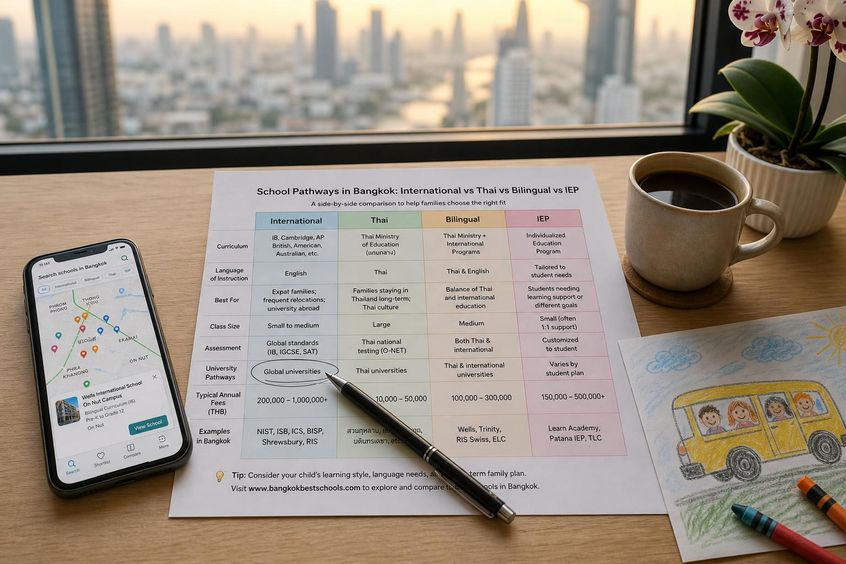
Use this table for first-pass planning. It helps you filter by fit and budget before you spend time on tours.
| Pathway | Approx annual tuition (THB) | Typical total first-year cost tendency | Language environment | Best fit profile |
|---|---|---|---|---|
| Thai track | 20,000 - 120,000 | Lowest, but quality varies by school | Mostly Thai | Long-term Thai integration, tighter budgets |
| IEP / EP in Thai schools | 80,000 - 260,000 | Mid-low to mid, depends on extras | Thai + stronger English blocks | Families wanting a middle ground |
| Bilingual private | 150,000 - 450,000 | Mid to upper-mid after fees | Balanced Thai-English | Families prioritizing two-language development |
| International | 250,000 - 900,000+ | Highest once levies and transport are added | Mostly English-medium | Families prioritizing global continuity |
These ranges move every year, so treat them as planning bands, not fixed promises.
If you want a tighter two-option comparison before using this four-pathway model, this guide can help: bilingual or international kindergarten decision tree.
Cost Reality: Tuition Is Not Your Real Number
Many families regret an early decision because the budget looked fine on tuition alone, then hidden costs changed the picture.

Common extras include:
- Application and registration fees
- One-time enrollment or development levies
- Uniforms, books, and activity packs
- Transport and route-based bus fees
- Meals, clubs, and term events
A safer rule is to budget 15-30% above tuition for total yearly cost, then test that number against the next two years, not only year one.
If your childcare plan also needs backup support during school closures or schedule gaps, review FamBear services early so school choice and home logistics stay aligned.
Hidden-Cost Checklist Before You Pay Any Enrollments
Use this checklist with every shortlisted school:
- Request a full written fee schedule, including one-time and recurring charges.
- Ask which fees usually increase each academic year and by how much.
- Confirm bus route availability and exact yearly transport cost for your address.
- Clarify what is refundable, partly refundable, and non-refundable.
- Confirm payment timing: annual, termly, or monthly.
- Ask whether language support or support classes cost extra.
- Confirm any fees tied to transition or adaptation periods.
If a school cannot provide clear written numbers, treat that as a risk signal.
Admissions Timeline: A Practical Working Calendar
Families miss strong options more often because of timing than because of philosophy.
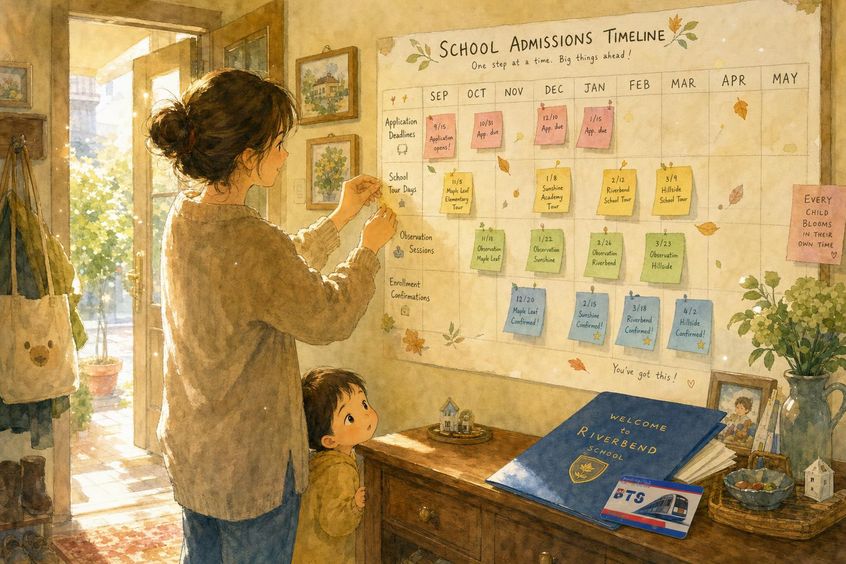
A simple working timeline for August starts:
12-9 months before start
Build a longlist, verify age cutoffs, and contact admissions about seat patterns.
9-6 months before start
Book visits, submit first applications, and prepare required documents.
6-4 months before start
Attend observations or assessments, compare offers, and validate full costs.

4-2 months before start
Finalize enrollment, transport, uniforms, and orientation plans.
Final 8 weeks
Run your adaptation plan: sleep schedule, route practice, and shared parent-child expectations.
If you are relocating from abroad, start earlier when possible. Seat availability can change fast at high-demand schools.
Decision Framework: Pick by Constraints, Not by Hype
Use this sequence to cut through analysis paralysis:
- Set a hard annual budget ceiling that feels safe for at least two years.
- Set language priority: Thai integration, English continuity, or balanced bilingual outcome.
- Set transfer probability: likely move abroad soon, or likely stay in Thailand.
- Set commute threshold: maximum realistic door-to-door morning time.
- Set child-fit filters: class-size comfort, support style, and adaptation approach.
Then score each school from 1-5 on each filter. In most cases, the strongest practical option becomes clear quickly.
Commute and Daily Operations: The Most Ignored Decision Driver
A school that looks ideal on paper can still fail in daily life if transport is unstable.
Common red flags:
- Child is already tired before class starts.
- Pickup windows clash with work routines.
- Backup pickup plans are unclear.
- Rainy-season traffic pushes routine past your tolerance.
Parents often underestimate this during shortlisting. Build commute stress into your model from day one.
If you need support around pickup windows while testing routines, short-term babysitter support or ongoing nanny support can reduce family disruption.
Stage-It Strategy: Start in Bilingual or EP, Reassess Later
A common Bangkok strategy is to begin in Thai-bilingual or EP/IEP during kindergarten, then reassess for international entry at primary transition.
Why families choose this approach:
- Lower early-year cost pressure
- More Thai exposure during early years
- More time to assess long-term relocation certainty
Main risks:
- Later transfer assessments can be competitive
- English academic writing pace may need bridging
- Social transition can be emotionally demanding
To lower risk, ask future target schools now what evidence they usually expect at transition.
School Visit Questions That Actually Matter
During tours, practical questions are more useful than brochure questions:
- What does a real weekly timetable look like by language and subject?
- How many teachers changed in the last academic year?
- What is your adaptation protocol for children who resist drop-off?
- How are parent concerns handled, and how quickly?
- What are typical next-step destinations after kindergarten?
- Which post-enrollment costs are mandatory versus optional?
Keep answers in one comparison sheet. After a few visits, memory gets unreliable.
For extra planning support while refining your shortlist, this related guide is useful: bilingual or international kindergarten decision tree.
30-Day Plan to Finalize Your Choice
Week 1:
- Lock budget band and top decision criteria.
- Build a shortlist of 4-6 schools.
Week 2:
- Complete visits and collect full fee sheets.
- Eliminate options that fail budget or commute limits.
Week 3:
- Score options as a family and discuss tradeoffs honestly.
- Prepare documents for your top two choices.
Week 4:
- Confirm offer terms in writing.
- Commit to one primary option and one backup.
A good kindergarten choice is not the one with the best marketing. It is the one your family can sustain financially, logistically, and emotionally for multiple years.
Frequently Asked Questions
In many Bangkok school contexts, IEP means Intensive English Program inside a Thai school. It usually refers to an English-intensified track, not automatically the same as special-education IEP terminology used in some other countries.
Is IEP or EP usually cheaper than full international kindergarten?In most cases, yes. IEP and EP pathways in Thai schools often sit in a lower cost band than full international schools, but families should still request full written fee breakdowns because extras can change the real total significantly.
Can a child move from Thai or bilingual pathways to international school later?Yes, many families do this. The key is to check future entry requirements early, including language expectations, assessment format, and year-group placement policy.
How early should expat families apply for kindergarten in Bangkok?For high-demand schools, starting 9-12 months before your target start month is safer. Some schools offer rolling admissions, but seat availability can tighten quickly.
What matters more at kindergarten stage: school brand or daily fit?Daily fit usually matters more for long-term success. A manageable commute, stable teachers, clear communication, and a child support approach your family can sustain often beat a famous brand with poor operational fit.