

If you are touring schools in Bangkok this month, the hardest part is not finding options. It is figuring out what you will actually pay after every extra fee is added. Most parents start with tuition screenshots, then discover that the real monthly number looks very different.
The practical way to avoid surprises is to budget in layers. Start with tuition. Add mandatory school fees. Add transport and meal assumptions. Add one buffer for seasonal or annual charges. That turns a stressful school hunt into a decision you can explain to your partner in five minutes.
What families actually pay for daycare in Bangkok
In parent discussions, the same pattern appears again and again: headline tuition is only the first number. Families comparing neighborhood options often see a low entry quote, but registration, supplies, uniforms, and transport push the monthly reality much higher.
For planning, most expat families split options into three tiers. Local or Thai-focused private programs are usually the lowest entry point. Bilingual schools are a middle tier where parents pay for stronger English environment and smaller classes. International kindergarten programs sit at the top and can move quickly once annual fees are spread across the year.
This does not mean one tier is always better. It means each tier solves a different problem. Some families prioritize language exposure, some prioritize commute time, and some simply need a stable monthly number they can sustain for a full year without stress.
A realistic monthly budget framework before school tours
Before visiting campuses, build a simple budget model with four boxes.
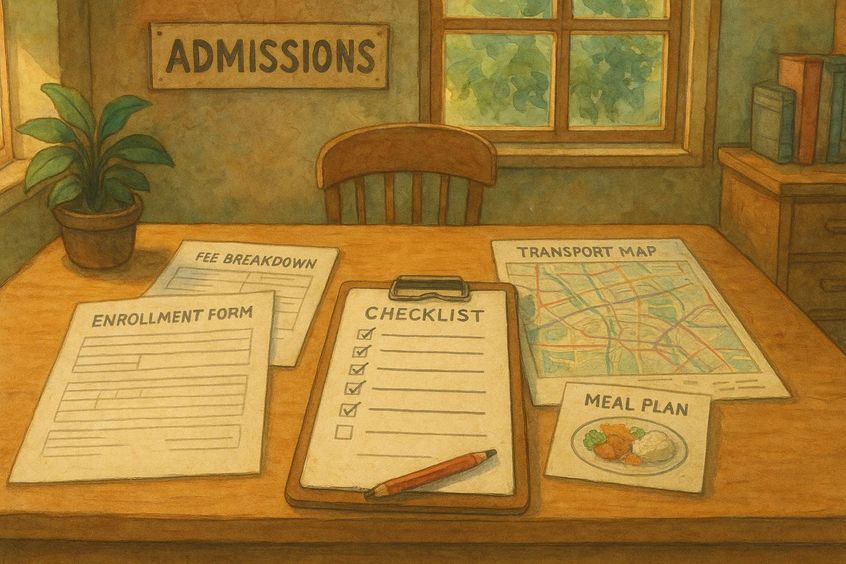
Box one is base tuition. Box two is fixed mandatory costs such as registration, insurance, uniforms, and activity packs. Box three is routine monthly operations such as meals, transport, and occasional after-school care. Box four is contingency, because at least one cost line always appears after enrollment.
A working benchmark many families use is to reserve around 15 to 25 percent above the quoted tuition as a safety margin for add-ons. In premium schools, that buffer can be higher. In smaller local programs, it can be lower, but rarely zero.
If you are deciding between center-based care and flexible in-home support, compare total weekly hours rather than just tuition labels. For some families with irregular work schedules, combining part-time daycare with a vetted babysitter can produce better coverage at similar total spend. You can compare available support options on babysitter services in Bangkok when building your backup-care line in the budget.
Hidden fees that change the decision
Parents usually miss hidden costs in three places.
First, enrollment timing. Some schools spread annual charges across terms, so the first two months look manageable, then the next invoice jumps. Ask for a full 12-month payment calendar, not a single monthly quote.
Second, transportation and pickup windows. A school that looks cheaper on paper can become expensive if pickup times force daily ride-hailing or if shuttle options are limited from your neighborhood.
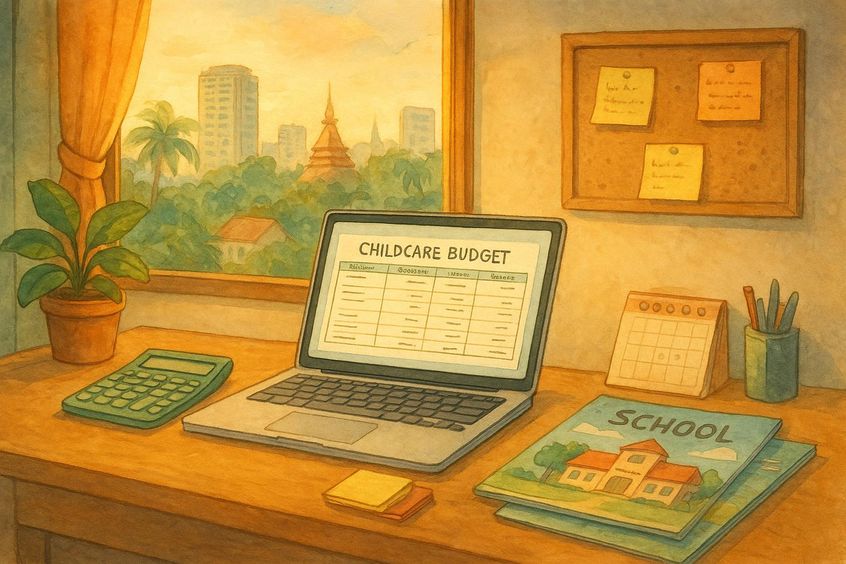
Third, optional programs that become socially mandatory. Clubs, field trips, special events, and branded supplies are technically optional in some schools, but in practice many families feel pressure to join. Budget for realistic participation, not theoretical minimums.
When you interview admissions teams, ask them to show one complete sample invoice for an existing student at your target age group. That single document tells you more than a polished brochure.
Daycare vs nanny math for expat families
Families often compare daycare only against full-time nanny cost, but the better comparison is schedule fit.
If both parents work fixed office hours, full-day center care can be easier to forecast. If your schedule includes early starts, travel days, or evening handoffs, center care alone may require extra paid help. That is where blended setups become practical.
Some families keep daycare for social learning and add limited home support for pickup gaps, sick days, or school holidays. Others use home-based care first, then move to kindergarten later. If you want to model both paths quickly, start with your weekly coverage gaps and match them against verified caregiver options on nanny services and all childcare services.
The useful question is not "Which is cheaper forever?" The useful question is "Which setup gives us predictable coverage at a monthly cost we can maintain for 12 months?"

How to shortlist schools without wasting weekends
A practical shortlist process saves money before you even enroll.
Set a maximum all-in monthly budget before your first tour. Send schools the same pre-tour question set: total annual fees, monthly tuition, meal policy, transport policy, late pickup policy, and expected extras by term. Remove any school that will not give transparent ranges.
Then visit only options that fit your real budget band. This avoids emotional overspend after a great campus tour.
During visits, ask who handles transition issues in the first month, how many children are in your target age room, and what happens on teacher absence days. These operational details affect whether you need additional paid support at home.
If your shortlist still feels noisy, use community insights from parents and compare with practical childcare alternatives already mapped in the FamBear blog. Real family workflows usually beat brochure promises.
Final reality check before you sign
Bangkok has excellent daycare and kindergarten options, but cost clarity is the difference between a smooth year and a stressful one. Tuition is only the entry number. The real budget is tuition plus operations plus contingency.
If you frame decisions around total monthly reality, not headline fees, you will choose faster and with less regret. That is exactly what experienced expat parents recommend after their first year in the city.
Frequently Asked Questions
What is a realistic monthly daycare budget in Bangkok for expat families?
Most families should model total monthly cost, not just tuition. A practical starting point is tuition plus a 15 to 25 percent buffer for meals, transport, uniforms, and activity fees.
Are kindergarten fees in Bangkok usually all-inclusive?
Usually no. Many schools quote tuition first, then add registration, annual fees, uniforms, and optional programs that can still feel necessary.
How can I avoid hidden childcare costs before enrollment?
Ask for a full 12-month sample invoice for your child age group, including all mandatory and typical optional charges. This is more reliable than brochure-level fee summaries.
Is daycare always cheaper than hiring a nanny in Bangkok?
Not always. For families with irregular schedules, a blended setup with part-time daycare and flexible caregiver support can be similar in cost and better for coverage.
What is the fastest way to compare Bangkok schools without wasting time?
Set your all-in budget first, send the same fee questions to every school, and tour only schools that provide transparent ranges. This prevents decision fatigue and overspending.