

If you are hiring a nanny in Bangkok for the first time, the hardest part is not finding candidates, but it is choosing the right person without wasting your time, money, and energy on mismatches.
Most of the first-time parents make the same mistakes. because they are incautious, and nobody gives help them during a practical process, however this guide will help you on that.
Mistake 1: Starting without a real job scope
Many families begin with a vague idea: "We need help with childcare." That sounds clear until day three, when everyone has a different definition of what "help" means.
One Bangkok parent told us their first nanny quit after ten days because the family expected meal prep, laundry folding, school pickup, and evening babysitting, while the nanny understood the role as daytime toddler care only. Nobody lied but nobody clarified enough.
Before interviews, write a one-page scope with five non-negotiables: child age focus, working hours, key daily tasks, overtime policy, and what is not included. Keep it simple language, not formal language.
When you use FamBear nanny services in Bangkok, you can align this scope directly with profile filters and availability windows. That alone removes a lot of "almost right" matches that waste time.
Mistake 2: Interviewing for personality only
First meetings can be misleading. A warm, polite candidate may still struggle with your child's routine. A quieter candidate may actually be excellent with toddlers.
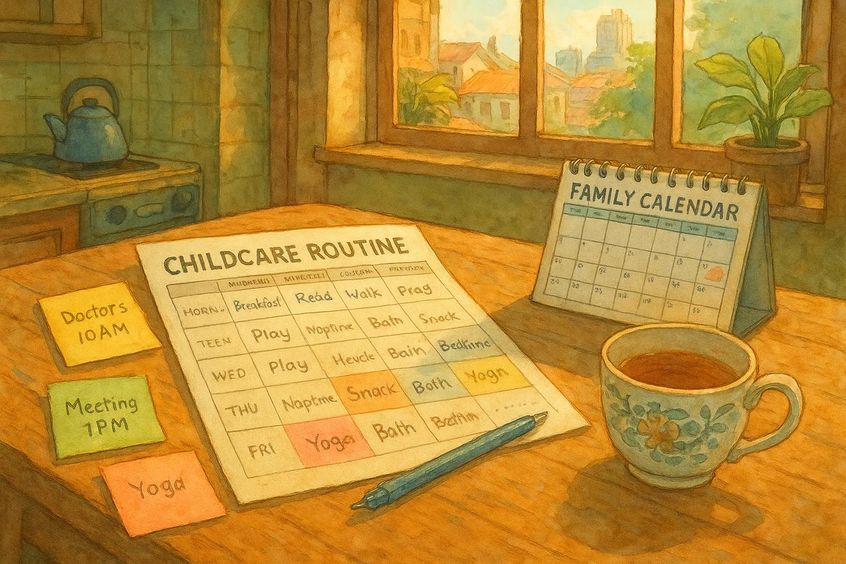
The interview should test on their behavior, not just vibe. Ask scenario questions tied to your real life: "Our child refuses lunch and starts crying before nap. What do you do in the first ten minutes?" or "School ends at 2:30 PM and traffic is heavy. How would you plan pickup timing?"
Use a short scoring sheet across the same categories for every candidate: communication, routine planning, safety judgment, and flexibility on schedule changes. Keep notes immediately after each interview. If you wait until the evening, everything blends together.
On FamBear, profile structure and review signals help you compare candidates on the same criteria instead of memory. That is a big upgrade from random chat threads and referrals alone.
Mistake 3: Skipping the trial day
Parents skip trial day when they feel rushed. Later, many say that choice cost them the most.
A good trial day does not need to be long. Four to six hours is usually enough to evaluate fit. You are not trying to see perfection. You are checking practical behavior: how the caregiver transitions activities, responds to resistance, keeps communication clear, and manages energy over time.
Plan your trial in blocks. First hour for settling and child connection. Middle hours for routine tasks like snack, play, and cleanup. Final block for debrief. Write observations while they are fresh.
If you are booking through FamBear's childcare service flow, define trial expectations before the shift starts. Candidates then know exactly what success looks like, and families make decisions from evidence, not guesswork.
Mistake 4: Treating pay as the only decision lever

Budget matters. But price without structure creates turnover.
In Bangkok, many first-time families compare offers only on headline numbers. Typical discussions land around 18,000-35,000 THB per month for full-time care depending on language ability, infant experience, and schedule complexity. Part-time windows can start around 250-400 THB per hour. In a few planning conversations, families like seeing rough USD context - around $550-$1,080 monthly at about 32.5 THB/USD as of April 2026 - but local decisions are made in THB.
The pattern is familiar: a family picks the lowest quote, then adds extra duties over time, then both sides feel disappointed. Two months later they restart the search.
A stronger approach is total-fit budgeting. Define core tasks, optional tasks, and peak-stress hours. Then choose a package that matches reality. When scope, schedule, and rate match from day one, retention improves.
Mistake 5: No onboarding plan for the first 30 days
Even a strong hire can fail in a weak onboarding setup. First-time families often assume the nanny will "figure it out" after one orientation chat.
Create a simple 30-day plan:
- Week 1: routines and home rules
- Week 2: independent execution with daily check-ins
- Week 3: edge cases, sick-day protocol, and backup contacts
- Week 4: review what works and adjust workload boundaries
This can be one page on your fridge or shared in notes app format. What matters is consistency.
Use one fixed weekly reset meeting, even if it is only 15 minutes. Cover three items: what went well, what felt difficult, and one adjustment for next week. That rhythm prevents resentment buildup on both sides.
Mistake 6: Ignoring parent-child fit signals
Parents sometimes evaluate only logistics and credentials. But caregiver-child chemistry is a major predictor of long-term success.

During the trial, watch transitions. Does the caregiver notice early signs of frustration? Do they adjust tone and pace? Do they respect your child's temperament instead of forcing compliance?
Also watch your own household flow. A nanny can be great with children but mismatched with your communication style as parents. Fit is a system issue, not a single-person issue.
FamBear's structured matching and verified profile details make this easier because you can narrow candidates by relevant experience before the trial stage. Then your trial validates fit instead of starting from zero.
A practical hiring framework you can use this week
If you want a low-drama process, use this sequence:
First, define your one-page role scope before speaking to candidates. Second, interview with scenario questions and a scoring sheet. Third, run a structured trial day with written observations. Fourth, align pay with actual scope, not assumptions. Fifth, run a 30-day onboarding plan with weekly resets.
This framework is not complicated, but it is consistently what separates smooth hires from repeated restarts.
If you are ready to start, explore FamBear's nanny profiles and services and compare options with clearer structure from day one. You can also browse more practical guides on the FamBear blog.
Final thought
First-time nanny hiring in Bangkok feels high-stakes because it is. But most risk comes from process gaps, not bad luck. Fix the process and your odds improve fast.
Do the prep once, then hire with confidence.
Frequently Asked Questions
The biggest mistake is starting without a clear job scope. When duties, schedule, and boundaries are vague, even good candidates can become a poor fit within weeks.
How long should a nanny trial day be?For most families, 4-6 hours is enough to evaluate real working behavior. Focus on transitions, communication, and how the caregiver handles your child's routine under normal pressure.
What should I include in a nanny job scope?Include child age focus, exact working hours, core childcare duties, overtime rules, and tasks that are explicitly out of scope. A one-page scope is usually enough if it is specific.
Is it better to hire part-time or full-time first?It depends on your actual weekly routine, not just budget. Many families start part-time for validation, then move to full-time once role expectations and fit are confirmed.
How can I check if a nanny is a good fit for my child?Run a structured trial day and observe activity transitions, emotional regulation, and communication with both child and parents. Good fit usually shows up in consistent small moments, not one perfect interaction.