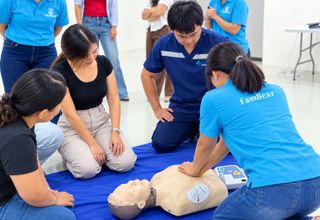
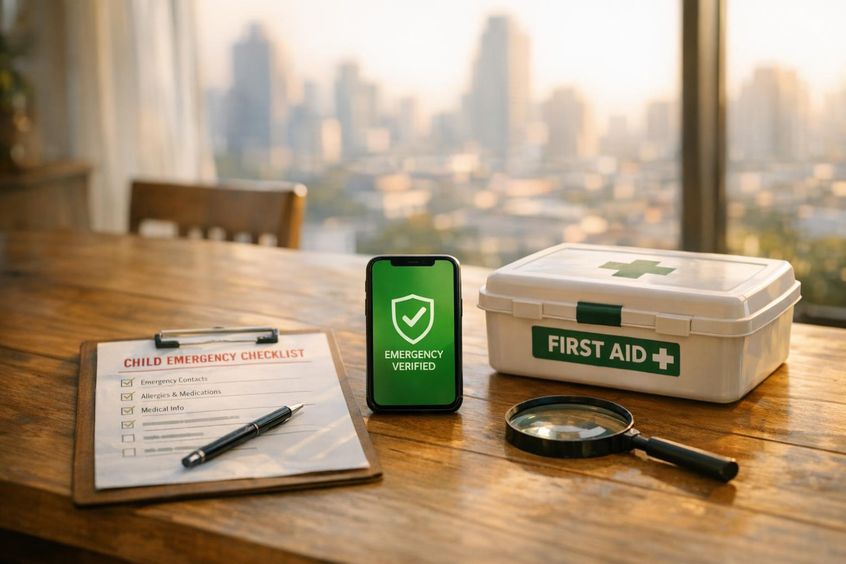
When a child chokes, nobody has time for long explanations. You need a shared plan that is clear, fast, and easy to follow.
In Bangkok, small delays can happen for practical reasons - traffic, condo access, or confusion about who should call first. A written emergency routine with your nanny will remove that confusion.
Start with a one-page emergency plan
Most families say, "Call me if something happens." In a real emergency, that is too vague.
A one-page plan should include:
- Child details (name, DOB, allergies, medications)
- Parent phone numbers in priority order
- Medical emergency number: 1669
- Preferred hospital + backup hospital
- Building access notes (lobby, tower, parking pickup)
- Transport consent note for urgent situations
If you are hiring now, set this expectation from day one when you find a vetted nanny in Bangkok.
Make sure age-based choking response is understood
Infants and older children need different first-aid actions. Your nanny does not need advanced medical training, but they do need the correct age-based basics and confidence under pressure.
Align on these rules:
- Identify severe choking signs quickly
- Follow age-appropriate first-aid response only
- Call 1669 early if breathing does not normalize fast
- Avoid delays caused by uncertainty or waiting for multiple approvals
In medically sensitive family situations, you may also review medical support caregiver options.
Build a practical first-aid setup for Bangkok family life
A standard first-aid kit is often missing what families actually need during daily childcare.
Recommended home kit:
- Digital thermometer
- Child-safe bandages and gauze
- Saline solution
- Age-appropriate fever medicine with dosage card
- Disposable gloves
- Printed emergency contact card
- Charged power bank
Useful local additions:
- Fastest route note from condo to pickup point
- Thai + English emergency phrase card
- Bilingual allergy note for your child
Keep one main kit at home and one compact kit in your go-bag.
If you use temporary help, apply the same checklist for short-term childcare backup.
Practice once a month (15 minutes)
Training once during onboarding is not enough. A short monthly drill works better than long theory sessions.
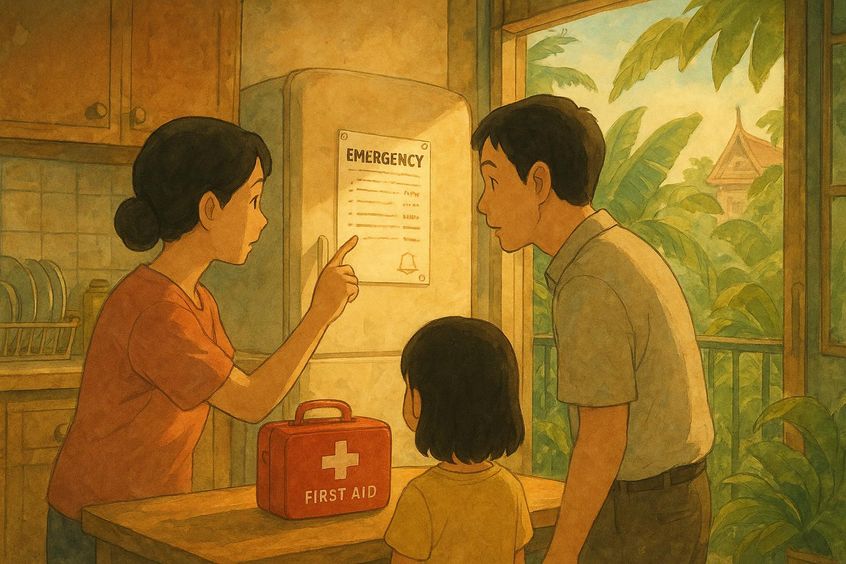
Monthly drill format:
- Simulate a choking alert
- Confirm who calls 1669 and who continues response
- Recheck hospital preference and contact order
- Rehearse security desk and building handoff steps
- Debrief what felt unclear
Consistency builds speed and calmer decisions.
Reduce risk with simple prevention habits
Preparedness matters, but prevention lowers incident risk most.
Daily habits:
- Cut high-risk foods into safe sizes
- Keep small objects off reachable surfaces
- No walking or running while eating
- Keep mealtime supervision active
- Run a quick toy-size scan each evening
What to put on your emergency contact card
Make the card short and bilingual. Place one in the kitchen and one in your child bag.
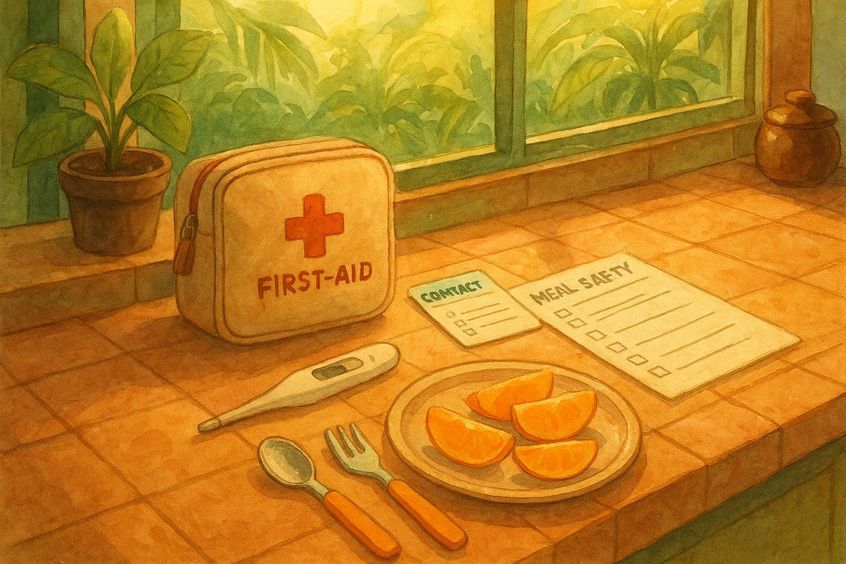
Include:
- Child full name + nickname
- Parent contacts + one backup contact
- Pediatric clinic and hospital choices
- Insurance reference info
- Building entry notes
- Emergency number 1669
For families optimizing the full childcare setup, compare all childcare services and keep one consistent safety standard across caregivers.
Bottom line
The right emergency plan is not complicated. It is the one your nanny can execute immediately.
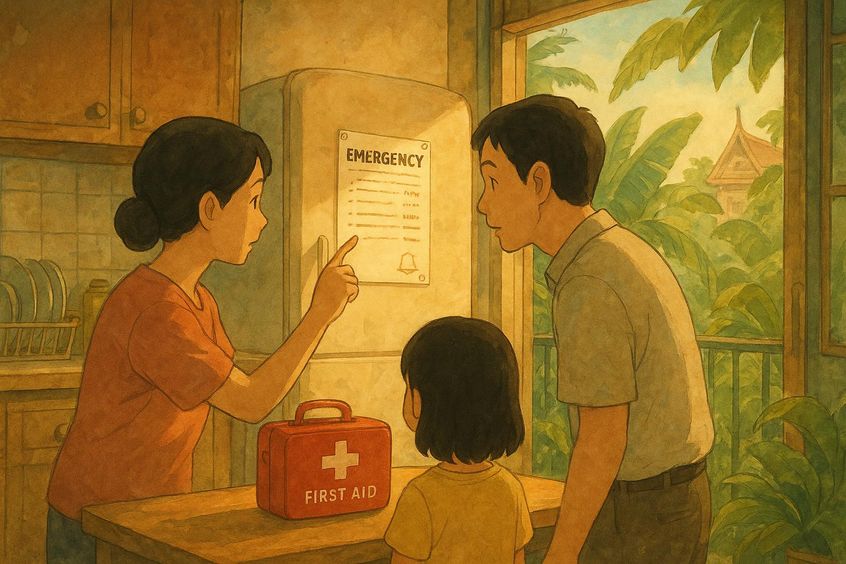
Write it, practice it monthly, and keep key tools visible. In a choking incident, clarity and speed make the difference.
For more practical guides, visit the FamBear blog.
Frequently Asked Questions
For urgent medical emergencies in Bangkok, call 1669 immediately. Add it to your nanny's favorites, keep it on a printed emergency card, and include your building access notes so handoff is faster.
How often should we practice choking and emergency response with our nanny?Run a short 15-minute drill once a month. Regular practice improves speed and coordination, and it helps everyone stay calm when stress is high.
What should be in a nanny first-aid kit at home?Keep a practical kit with thermometer, bandages, gauze, saline, child-safe fever medication with dosing notes, gloves, and a printed emergency contact card. Also keep a compact version in your go-bag.
Should our emergency contact card be bilingual?Yes. In Bangkok, bilingual EN + TH notes can reduce confusion during building handoff or hospital intake. Include child details, parent contacts, hospital choices, and allergy notes.
How can we reduce choking risk day to day?Focus on prevention habits: cut food into safe sizes, keep small objects out of reach, supervise meals actively, and avoid running or walking while eating. A daily toy-size scan is also helpful.