When Rose finished her four-week training at ABRACADABRA in Bangkok, she said something that stuck with the program directors: "I learned so much how to educate a child. I know now what to do when the child has a tantrum." That confidence didn't come from years on the job. It came from structured nanny certification Bangkok families and agencies increasingly expect before they'll even consider a candidate.
Why Caregiver Certification Matters in Thailand
Thailand has no government license for individual nannies. Unlike nurseries and daycare centers, which fall under the Ministry of Social Development and Human Security, a person caring for children in a private home operates in an entirely unregulated space. Anyone can call themselves a nanny. That's exactly why certifications matter.
With only 1,235 private nurseries remaining in Thailand after COVID-era closures, more families are turning to in-home care. Expat families in Bangkok have pushed demand for caregivers who can show real qualifications - English fluency, CPR and first aid training, background checks, early childhood development knowledge. For a deeper look at what families are willing to pay, our breakdown of nanny salary ranges in Bangkok shows how compensation shifts once a caregiver holds recognized credentials.
The market itself has become the regulator. Families who use platforms like FamBear's caregiver services can filter for verified training and certifications. Untrained caregivers simply don't appear in the searches that matter most.

Top Nanny Certification Bangkok Programs
Bangkok offers a surprisingly rich set of caregiver training options, from intensive multi-month programs to focused weekend courses. Here are the programs shaping the profession.
Baan Dek Thai Nanny School stands alone as the only Ministry of Education-certified nanny training program in Thailand. Established in 1997, the school runs a 420-hour curriculum covering child development, nutrition, health and safety, and household management. Over 1,500 graduates in nearly three decades. The program is rigorous - several months of full-time study - but graduates consistently command the highest salaries in Bangkok.
ABRACADABRA takes a different approach with a four-week intensive course rooted in Montessori philosophy. The program is bilingual, which makes it attractive to caregivers working with international families. Mahlet, one of their graduates, put it simply: "I am so happy and thankful for this course." The shorter timeframe works for caregivers who can't commit to months of training.
Types of Childcare Certifications Available
Not all certifications carry equal weight, and understanding the differences helps both caregivers and families make better decisions.
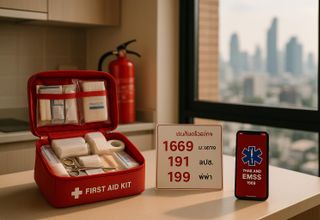
First aid and CPR certification is the baseline. Nearly every family expects it now. Bangkok First Aid offers American Heart Association-certified CPR and AED courses that run one to two days and cost between 2,000 and 5,000 baht - roughly $60 to $140 as of April 2026. This is the single most practical investment a caregiver can make. Many families consider it non-negotiable.
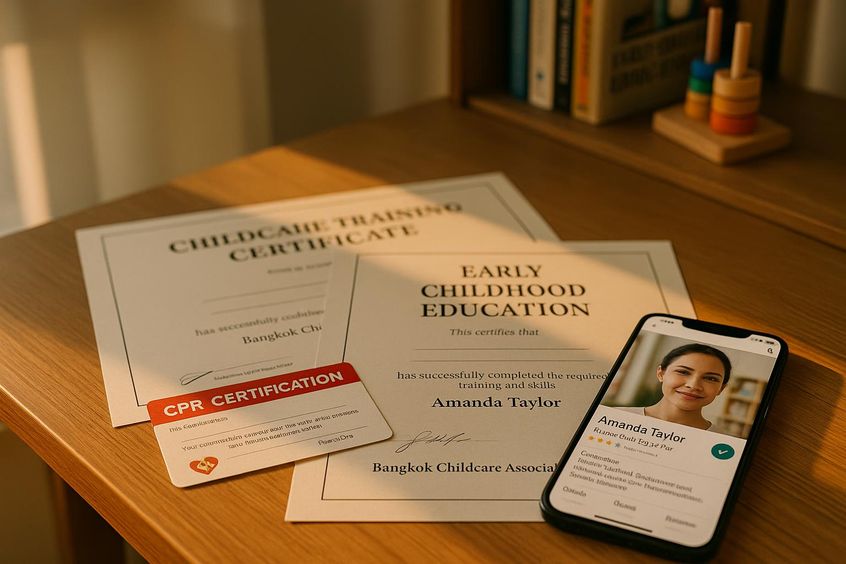
Early childhood development certificates go deeper. They cover milestones, age-appropriate activities, behavioral guidance, and learning through play. Programs like Baan Dek's 420-hour course and ABRACADABRA's Montessori training fall into this category. These certificates tell families that a caregiver understands not just how to keep a child safe, but how to support their growth.
Then there are specialized certifications - newborn care, special needs support, nutrition planning, bilingual education. Each one lets a caregiver stand out in a specific niche. A caregiver with newborn care training and CPR certification becomes extremely valuable to first-time parents dealing with those exhausting early months.

For caregivers mapping out which certifications to pursue first, our complete caregiver career guide walks through the progression from entry-level to premium positions.
How to Choose the Right Training Program
Choosing a program comes down to three practical questions: where are you now, where do you want to be, and what can you afford in time and money?
A caregiver with several years of experience but no formal credentials might start with a first aid course from Bangkok First Aid. Two days and a few thousand baht later, they have an internationally recognized certification that immediately strengthens their profile. From there, an online self-paced childcare course can add early childhood development knowledge without disrupting their work schedule.
Someone entering the profession fresh might invest in Baan Dek's comprehensive program from the start. The 420-hour commitment is significant, but it opens doors to the highest-paying positions in Bangkok. Consider Cassidy O'Hagan, who left medical sales at 22 to become a professional nanny. With the right training and positioning, she now earns between $150,000 and $250,000 annually working with high-net-worth families. That's an extreme example from the international market, but it shows where serious professional development can lead.
Budget matters. A weekend first aid course at 2,000 baht is accessible to almost anyone. ABRACADABRA's four-week program requires more commitment but remains far shorter than Baan Dek's months-long curriculum. The key is to start somewhere and build over time rather than waiting for the perfect moment.
How Certifications Boost Your Nanny Career in Bangkok
The financial case for certification is straightforward. An untrained caregiver in Bangkok typically earns between 13,000 and 15,000 baht per month. A caregiver with recognized training and certifications can expect 20,000 to 30,000 baht or more - a premium of roughly 50 percent. For part-time work, hourly rates range from 150 to 300 baht depending on qualifications, with certified caregivers consistently at the upper end.
It's not only about salary. Certifications open access to a different tier of families. Expat families and high-income Thai households tend to offer better working conditions, clearer expectations, and longer-term stability. When families search for caregivers on FamBear, certification badges serve as instant trust signals that move a profile to the top of the list.
Career mobility improves too. A certified nanny can move into roles as a household manager, a newborn care specialist, or a family travel companion. Each step up gets easier with documented training, because families hiring for premium roles need evidence of professional development.
What Families Should Look for in Certified Caregivers
For parents reading this from the other side - wondering what certifications actually mean in practice - here's what matters most.
Start with first aid and CPR. A caregiver who has practiced chest compressions on a training mannequin and learned to recognize choking in an infant will respond differently in an emergency than one who hasn't. Ask to see the certificate, check the issuing organization, and confirm it's current. AHA-certified courses through providers like Bangkok First Aid are the gold standard.
Early childhood development training comes next. A caregiver who has studied child development milestones will notice when a toddler's speech seems delayed or when a behavioral pattern suggests something worth discussing with a pediatrician. That kind of knowledge turns a caregiver from someone who watches your child into someone who actively supports their development.
Consider the source of the certification too. Baan Dek's Ministry of Education backing carries institutional weight. ABRACADABRA's Montessori focus signals a specific educational philosophy. Online childcare certificates show initiative and ongoing learning.
And remember - certifications complement experience, they don't replace it. The ideal caregiver combines formal training with genuine warmth and practical know-how. When interviewing candidates, our guide to interview questions to ask your nanny can help you evaluate both the credentials and the person behind them.
Whether you're a caregiver building your professional profile or a family searching for qualified care, Bangkok has real training pathways worth exploring. Platforms like FamBear make it easier to connect certified caregivers with families who value that investment - turning training certificates into actual job opportunities.
Frequently Asked Questions
Do nannies need certification in Thailand?
No formal government license exists for individual nannies in Thailand. Unlike daycare centers and nurseries, home-based childcare is unregulated. That said, certifications have become the market standard, especially among expat families and higher-income Thai households who use platforms like FamBear to find qualified caregivers. Without credentials, nannies miss out on better-paying positions and more stable work.
How much does nanny training cost in Bangkok?
It depends on what you're after. A basic CPR and first aid course through Bangkok First Aid costs between 2,000 and 5,000 baht (roughly $60 to $140 as of April 2026) and takes one to two days. ABRACADABRA's four-week Montessori nanny training costs more but stays accessible for working caregivers. Baan Dek Thai Nanny School's 420-hour program is the biggest investment in both time and money - but graduates consistently earn the highest salaries in the market.
What is the best nanny certification program in Thailand?
Baan Dek Thai Nanny School is the only Ministry of Education-certified nanny training program in Thailand, with a 420-hour curriculum and over 1,500 graduates since 1997. For caregivers who prefer a shorter, Montessori-focused approach, ABRACADABRA offers a well-regarded four-week bilingual program. The best choice depends on your career goals, budget, and available time. Most caregivers do well starting with first aid certification and building from there.
How long does it take to become a certified nanny?
Varies a lot. A CPR and first aid certification takes one to two days. ABRACADABRA's Montessori nanny training runs four weeks. Baan Dek Thai Nanny School's full program spans 420 hours over several months. Online options are self-paced, so it depends on the learner. Many caregivers take an incremental approach - start with first aid, then add specialized certifications over time while working.
Does having a certification increase nanny salary in Bangkok?
The salary difference is real. Untrained nannies in Bangkok typically earn between 13,000 and 15,000 baht per month, while caregivers with recognized certifications command 20,000 to 30,000 baht or more - roughly 50 percent higher. Part-time rates show the same gap: 150 baht per hour uncertified vs. 300 baht per hour with strong credentials. Certification pays for itself within the first few months of higher earnings.
What certifications do expat families look for?
Expat families in Bangkok consistently prioritize four areas: CPR and first aid certification (preferably AHA-certified), English language proficiency, early childhood development training, and verified background checks. Montessori or play-based learning certifications are increasingly valued, especially for toddlers and preschool-age children. Newborn care specialization is highly sought after by first-time parents. On FamBear, families can filter for these specific qualifications when browsing caregiver profiles.