Living in Bangkok with Toddlers - A Practical Guide for Expat Families
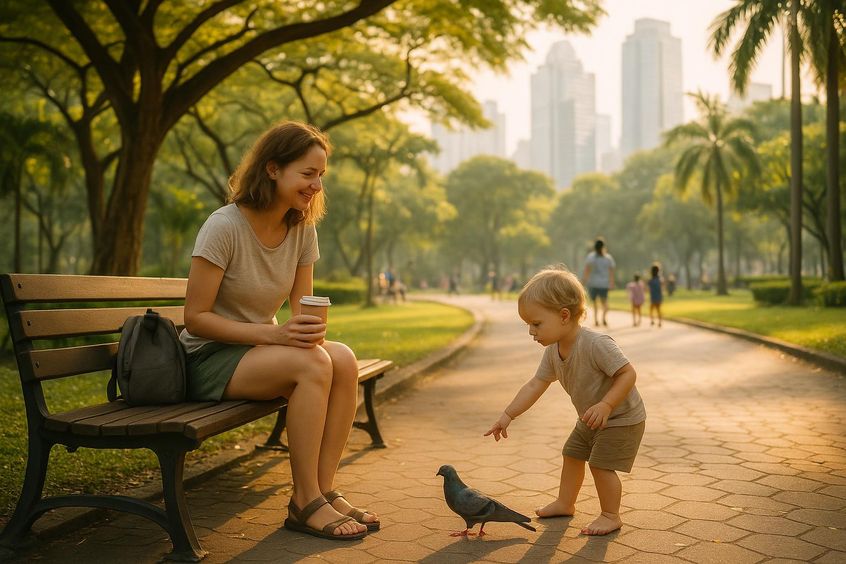
Your toddler's shoes are off again, and the woman selling mango sticky rice is already waving at her. It's 7:45 AM in Benjasiri Park, the only window before Bangkok's heat turns a playground visit into an endurance test. By nine o'clock, you'll be in an air-conditioned mall, and by afternoon you'll wonder how you ever managed without a nanny who shows up six days a week for less than your old grocery bill back home.
Living in Bangkok with toddlers is nothing like visiting. The tourist guides talk about temples and floating markets. The reality is AQI apps, playgroup waitlists, and figuring out which neighborhood puts you close enough to a good hospital without bankrupting you on rent. This guide is for families already here or about to arrive - the practical, sometimes messy truth about raising a one-to-four-year-old in this city.
Why Bangkok Works for Families with Toddlers
Bangkok is, by almost any measure, one of the easiest cities in Asia to raise a small child - if you know what you're getting into. Full-time childcare costs roughly a third of what families pay in London or Sydney. Thai culture genuinely adores children, to a degree that startles newcomers. One British family on a travel blog described restaurant staff playing with their boys so they could actually finish dinner in peace. That's not an exception. That's Tuesday.
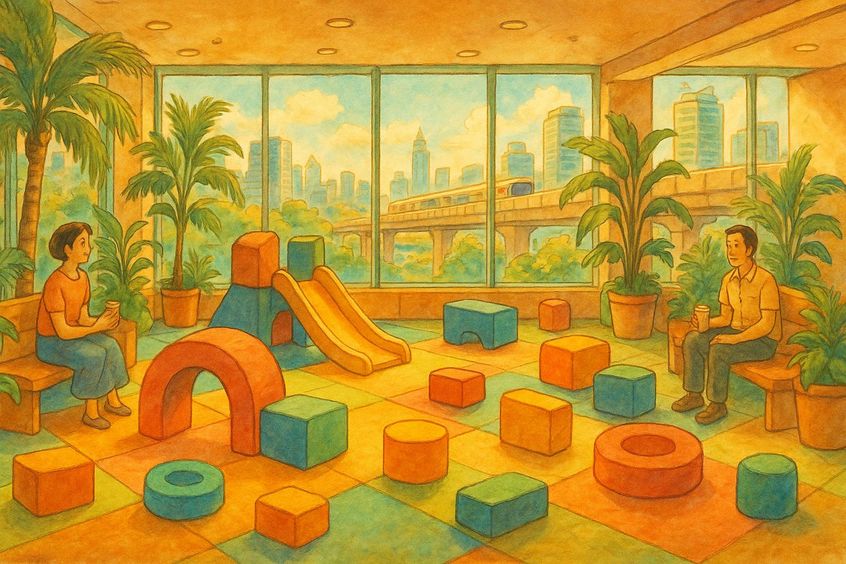
The infrastructure helps too. Bangkok's mega-malls are climate-controlled sanctuaries with dedicated kids' zones, nursing rooms, and indoor playgrounds. Private hospitals like Samitivej and Bumrungrad run pediatric departments in English, Japanese, and Mandarin. And the expat parent community - anchored by BAMBI, a volunteer-run network founded in 1982 - runs weekly playgroups, workshops, and meetups that make it possible to build a village faster than you'd expect.
None of this means it's effortless. But the foundation is solid.
A Typical Day with a Toddler in Bangkok
Heat shapes everything. Families with toddlers develop routines that revolve around outdoor windows - before nine in the morning and after four in the afternoon - with indoor time filling the gap. A German digital nomad mom put it bluntly: "You basically live in the car, going from one indoor playground to another. The traffic can be a nightmare, and just a short drive to a park can take forever."
That's the worst-case version. Families who choose their neighborhood well can walk to a park at dawn, hit a playgroup by mid-morning, and be home for nap time without sitting in traffic at all. The key is proximity. In a city where five kilometers can take 45 minutes by car, your daily radius matters more than your apartment's square footage.
Evenings are the reward. Bangkok's restaurants welcome toddlers with a warmth that feels almost conspiratorial - as if the staff and your child have agreed to make your life easier while you eat pad thai. High chairs appear without asking. Mild chicken rice and egg noodles show up alongside whatever you ordered. Nobody glares when your two-year-old drops a spoon for the fourth time.
Best Neighborhoods in Bangkok for Families with Toddlers
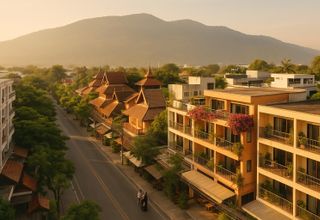
Phrom Phong is where most expat families with toddlers start looking, and for good reason. Benjasiri Park is a five-minute walk from the BTS, Samitivej Hospital is nearby, and the Emporium and EmQuartier malls are basically extensions of your living room. Rent for a two-bedroom runs 50,000 to 80,000 baht a month, which makes it the priciest option but also the most convenient.
Ekkamai and Thonglor, one and two BTS stops east, offer a calmer stretch of Sukhumvit with more space per baht. Families who want a live-in nanny often end up here because three-bedroom units are more affordable. Playville, one of Bangkok's best toddler play spaces, is a short walk from Thonglor BTS. The neighborhood's cafe culture means plenty of options for parents who need coffee while their child needs crayons.
Sathorn draws families who prefer a quieter pace and proximity to Lumpini Park. BNH Hospital is in the area, and rent for a two-bedroom drops to the 40,000 to 70,000 baht range. The trade-off is you'll probably need a car. Ari, further north, is the value play - charming, walkable, and 20,000 to 35,000 baht for a two-bedroom - but international school access is limited, so factor in a school bus when your toddler ages up.
Daycare and Childcare Options for Toddlers
The nanny-versus-daycare decision is the one every expat family with a toddler wrestles with, and Bangkok makes it harder by offering both at prices that feel almost too good to be true.
A full-time nanny who speaks basic English and works six days a week starts around 15,000 baht a month. That climbs to 25,000 or 33,000 baht for someone with experience and strong English. One Reddit user summed up the expat consensus: "Many drawbacks of living here, but by far the biggest family perk with young children is access to relatively inexpensive nannies." At the high end, an experienced English-speaking nanny runs about 33,000 baht a month as of April 2026 - a fraction of what the same quality costs in most Western cities.
International daycare centers charge 20,000 to 50,000 baht monthly, with places like KiDO offering Waldorf-inspired programs in English. Thai-language daycares cost less - 10,000 to 20,000 baht - but the language barrier can worry families who want their toddler in an English-speaking environment.
Plenty of families combine both. Mornings at daycare give structure and socialization. A part-time nanny covers afternoons and gives parents flexibility. FamBear's verified nanny profiles make finding that afternoon person considerably easier - every caregiver is skill-tested before appearing in search results, so you're not gambling on interview charm alone.
Toddler-Friendly Activities and Indoor Play Spaces
On high-AQI days - and there will be plenty between December and March - indoor playgrounds become essential infrastructure. Funarium on Sukhumvit 26 has been the expat toddler standard for years, with soft play areas and creative zones designed specifically for little kids. Harborland operates at a larger scale across multiple locations. Playville near Thonglor BTS runs workshops for babies as young as six months. These aren't rainy-day backup plans. They're core parts of the weekly routine.
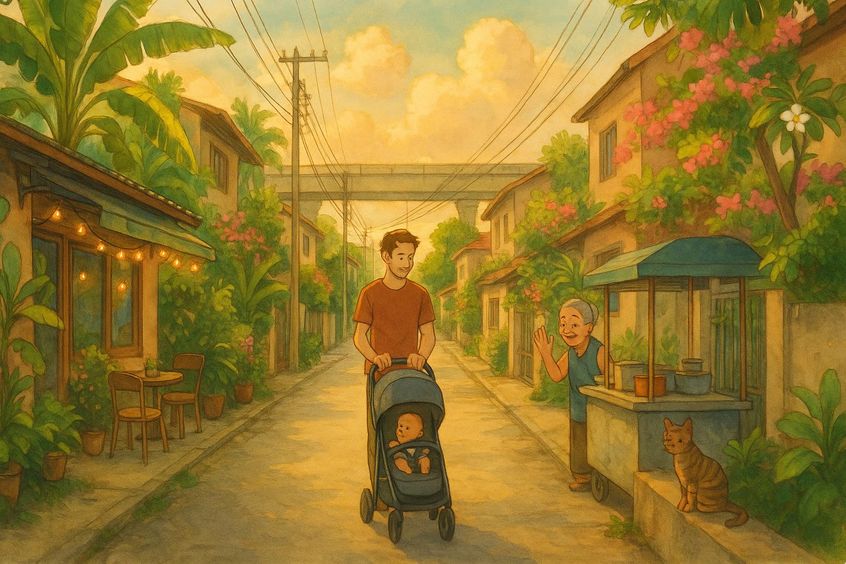
When the air cooperates, Bangkok's parks are genuinely good for toddlers. Lumpini Park has shaded paths, swan boats, and enough space that a toddler can run without you worrying about traffic. The Children's Discovery Museum next to Chatuchak Park is free and interactive - probably Bangkok's best-kept secret for the under-four crowd. Benjasiri Park in Phrom Phong is smaller but central, and it fills with expat families every morning before the heat arrives.
Malls deserve their own mention. In Bangkok, they're not just shopping centers - they're where toddler life actually happens half the week. SEA LIFE Bangkok at Siam Paragon has an underwater tunnel that makes toddlers lose their minds (in the good way). EmQuartier, Emporium, and Central World all have dedicated play areas. It might not feel like an authentic Thai experience, but it's an authentic Bangkok-with-toddlers experience.
Building a Community - Expat Parent Groups
Isolation is the quiet risk of expat parenthood. You're in a new city, your toddler doesn't nap on schedule, and your partner works long hours. This is where Bangkok's parent community genuinely shines.
BAMBI - Bangkok Mothers and Babies International - has been running since 1982 and remains the backbone of the expat parent network. Weekly playgroups, educational workshops, and social meetups happen across the city. Membership gets you discounts at school-based playgroups too - 150 baht instead of 300 at places like Ascot International. VERSO International School runs a free "Little Explorers" session on Thursday afternoons for ages one to three, and Regent's hosts drop-in playgroups twice a week.
The Japanese community has built its own parallel infrastructure. The Japanese Association of Thailand operates Sukusuku-kai, a support group for Japanese mothers with a dedicated play space stocked with toys donated by departing families. It works like a children's center, giving new arrivals the kind of structure that helps them find their footing fast.
Facebook groups fill the remaining gaps. Bangkok Expat Families, Thailand Babies, and Expat Mummy Club are where parents trade nanny recommendations, pediatrician referrals, and honest reviews of daycare centers. If you need to know which BTS station has a working elevator for your stroller, someone in those groups answered that question yesterday.
Dealing with Heat and Air Pollution
The pollution conversation is unavoidable. Between December and March, PM2.5 levels in Bangkok regularly exceed WHO guidelines. In January 2026, the AQI hit 181 - that means "stay indoors with windows closed." UNICEF Thailand has warned that fine particulate matter can impair lung development in young children and increase asthma risk.
Practical steps matter more than worry. An air purifier at home is not optional - it's essential equipment, like a car seat. One Reddit expat admitted buying one and realizing "it was a stupid routine to open my balcony door by default every day." Monitor AQI daily through the IQAir app. Limit outdoor time when readings climb above 100. Choose accommodation away from busy roads. When evaluating daycares, ask about their air filtration systems. It's a completely fair question and tells you a lot about how seriously they take this.
The good news: the worst season lasts about four months. From June through October, rain washes the air clean. Families who time their outdoor routines around both heat and air quality find a workable rhythm.
Healthcare and Hospitals for Young Children
Bangkok's private hospitals are a genuine advantage for families with toddlers. Samitivej Sukhumvit is the most popular among expat families, with multilingual staff and a pediatric department that honestly feels like it was designed by parents who'd been through it themselves. Bumrungrad is world-class by any standard. BNH in Sathorn rounds out the top tier.
Vaccinations follow a WHO-aligned schedule, and private hospitals can accommodate international vaccination timelines - American, British, or Australian - if your pediatrician back home has specific requirements. Bangkok Hospital offers comprehensive vaccine packages for children from one to eighteen months.
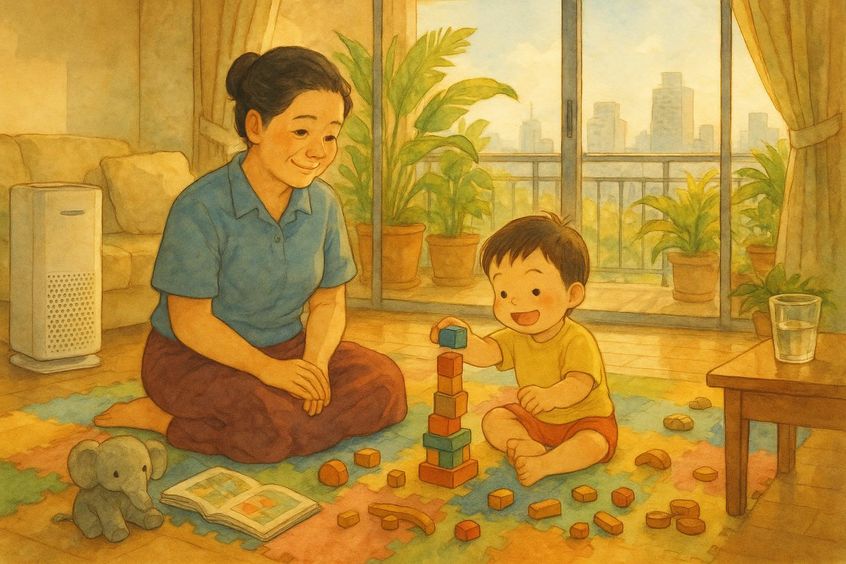
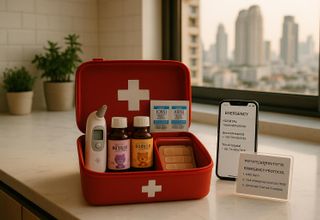
The common toddler health issues here are predictable: heat rash, dehydration, and the occasional stomach upset from water quality. Never drink tap water, and use filtered or bottled for cooking and washing fruit. Hand, Foot, and Mouth Disease circulates through daycares and playgroups with frustrating regularity. During burning season, respiratory symptoms spike in kids who are sensitive to air pollution.
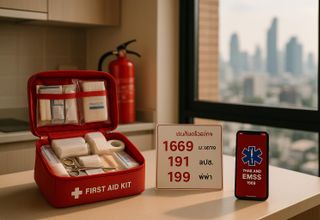
Health insurance for toddlers can be expensive - this is one area where Bangkok's cost advantage gets thinner. Arrange coverage before you arrive if possible, and confirm that your plan covers the private hospitals where you'd actually want to take your child. FamBear's caregiver profiles include first-aid training verification, which is one more thing you don't have to worry about.
Hiring a Nanny or Babysitter for Your Toddler
Finding someone you trust with your toddler is the most consequential decision you'll make in Bangkok, and it deserves more than a Facebook post and crossed fingers. The expat community has learned hard lessons here. One Reddit user warned about agencies that pay nannies so little "you would trust your kid with such a low salary and expect them to do good things." The nanny who accepts 13,000 baht is often the nanny who leaves for 18,000 next month.
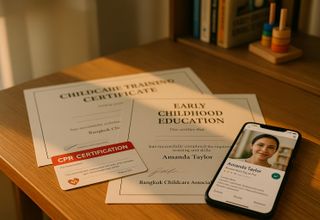
FamBear approaches this differently. Every caregiver goes through practical skill assessments and background checks before their profile goes live. It's the difference between hiring based on a WhatsApp conversation and hiring based on verified competence - from how they handle a toddler tantrum to whether they know infant CPR. For families who need occasional evening coverage rather than full-time help, FamBear's on-demand babysitter service connects you with vetted sitters who've already passed the tests most parents wouldn't think to give.
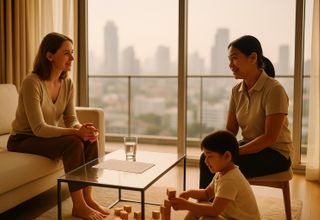
Thai nannies may approach feeding, discipline, and sleep training differently than you expect. That's not a problem, but it does require clear communication from day one. Families who write down their routines and expectations - even in simple English with pictures - report much smoother relationships than those who assume shared understanding.
Common Challenges and How to Handle Them
Screen time creeps up faster in Bangkok than anywhere else. When it's too hot to go outside and too polluted to open a window, the iPad becomes the easy answer. Building a rotation of indoor activities - playgroups, mall play areas, music classes, even just a different indoor playground each day - helps keep screens as the exception rather than the default.
Getting around with a stroller is an exercise in creative problem-solving. BTS and MRT stations have elevators, but finding them sometimes requires a treasure map. Grab cars almost never have car seats - bring a portable one or accept the uncomfortable compromise most expat families quietly make. Walking is often impractical: broken sidewalks, no shade, and intersections that weren't designed with pedestrians in mind, let alone someone pushing a stroller.
Then there's the cultural adjustment. Thai parenting tends to be more relaxed and community-oriented than Western approaches. Extended family is deeply involved. Children are given more freedom and less structured supervision. None of this is wrong - it's just different, and it can take time to find your comfort level between Thai warmth and Western safety expectations. As one expat mom put it: "Life is more relaxed, people truly love children, and we can afford more time together as a family. It is not perfect, of course. Traffic, heat, and visas can be stressful."
Bangkok with a toddler is messy, sweaty, and occasionally maddening. It's also affordable, warm in every sense, and full of families who arrived with the same questions you have now. The ones who settle in well are the ones who joined a playgroup, found a nanny they trust, and stopped comparing everything to back home. If you're looking for help with that middle part - finding the right caregiver - browse verified caregivers on FamBear. For more on the move itself, here's our guide on planning your move to Bangkok with kids.
Frequently Asked Questions
Is Bangkok a good city for families with toddlers?
Bangkok is one of the most family-friendly cities in Southeast Asia for toddlers. Thai culture is genuinely welcoming to young children, affordable full-time childcare starts around 15,000 baht a month, and the city offers dozens of indoor playgrounds, international playgroups, and world-class pediatric hospitals. The main challenges are heat, air pollution during burning season (December through March), and traffic - all manageable with the right neighborhood and daily routine.
What are the best areas in Bangkok for expat families with young children?
Phrom Phong is the most popular choice for expat families with toddlers thanks to Benjasiri Park, Samitivej Hospital, and direct BTS access, though two-bedroom rents start around 50,000 baht. Ekkamai and Thonglor offer more space at lower prices and work well for families who want a live-in nanny. Sathorn is quieter with access to Lumpini Park, while Ari provides the best value at 20,000 to 35,000 baht for a two-bedroom, though international school options are limited.
How much does daycare cost in Bangkok for toddlers?
Thai-language daycares typically charge 10,000 to 20,000 baht per month. International or bilingual daycare centers range from 20,000 to 50,000 baht monthly, with programs like KiDO offering Waldorf-inspired English-medium education. Many expat families combine part-time daycare in the mornings with a part-time nanny for afternoons, which provides both socialization and flexibility.
Are there English-speaking daycares in Bangkok?
Yes, many. KiDO, Kiddy Castle, Bright Skies, and numerous international school-affiliated programs all operate in English. Most are concentrated in the Sukhumvit and Sathorn areas, with some options in Ari and along the BTS line.
What indoor activities are available for toddlers in Bangkok?
Bangkok has an extensive network of indoor play spaces designed for toddlers. Funarium on Sukhumvit 26 caters specifically to young children, Harborland operates large-scale play centers across multiple locations, and Playville near Thonglor BTS runs workshops for children as young as six months. Shopping malls like EmQuartier, Emporium, and Siam Paragon all have dedicated kids' zones, and SEA LIFE Bangkok aquarium is a popular toddler outing. The Children's Discovery Museum near Chatuchak Park is free and fully interactive.
Is it safe to raise a toddler in Bangkok?
Bangkok is generally safe for families, with low violent crime rates and a culture that looks out for children. The main health considerations are air pollution during the dry season (invest in a home air purifier and monitor AQI daily), heat management (limit outdoor time between 9 AM and 4 PM), and water quality (use filtered or bottled water for everything including cooking). Private hospitals like Samitivej and Bumrungrad offer excellent pediatric care, and comprehensive vaccination packages are widely available.
How do expat families find babysitters and nannies in Bangkok?
Expat families find caregivers through platforms like FamBear that vet and skill-test nannies before listing their profiles, through word-of-mouth recommendations in parent communities like BAMBI, and through Facebook groups such as Thailand Babies and Expat Mummy Club. Full-time nannies with basic English start around 15,000 baht per month, while experienced English-speaking nannies command 25,000 to 33,000 baht. Babysitting rates for occasional coverage run about 300 baht per hour.
What vaccinations does my toddler need in Bangkok?
Thailand follows a WHO-aligned vaccination schedule. Private hospitals like Samitivej and Bumrungrad can accommodate international timelines (US, UK, Australian schedules) if your pediatrician back home has specific requirements. Bangkok Hospital offers comprehensive vaccine packages for children from one to eighteen months. Bring your child's vaccination records when you arrive.