A mother in Sukhumvit left for a two-hour meeting. Before she even reached the BTS station, her phone buzzed. The nanny was calling, panicked, because her toddler had grabbed a grape and was choking. The nanny didn't know what to do. She froze.
The mother talked her through back blows over the phone, and the child was fine. But that story, shared on a Bangkok parenting forum in early 2026, gets at something most families would rather not think about: nanny emergency preparedness in Bangkok isn't optional - when you're not home, your nanny becomes your child's first responder.
Bangkok is a city of contrasts when it comes to child safety. World-class hospitals sit minutes from your condo, yet monsoon flooding can stretch a fifteen-minute drive into an hour-long nightmare. Ambulance response through the national 1669 line averages ten to fifteen minutes in urban Bangkok - decent by global standards. But in a choking or drowning scenario, brain damage can begin in three to four minutes. That gap between "ambulance dispatched" and "ambulance arrives" is exactly where your nanny's training matters most.
Why Emergency Preparedness Matters for Nannies in Bangkok
Thailand has made real progress in child safety. A national "Merit Maker" program helped cut child drowning deaths by 57 percent, dropping the annual toll from roughly 1,500 to under 700. Drowning still kills more Thai children than anything else, though. Kids under 15 account for about one in five of all drowning fatalities nationwide, and during Songkran alone, drowning deaths spike by 1.5 times.
Those numbers hit different when you consider that most nannies in Bangkok spend hours each day near pools, bathtubs, and water play areas - often without any formal water safety training.
Heat is another factor. Thailand's heat index can blow past 52 degrees Celsius in peak season, and the government advises keeping children indoors between 11 a.m. and 3 p.m. UNICEF estimates over ten million Thai children are affected by extreme heat every year. A nanny who spots the early signs of heatstroke - flushed skin, confusion, rapid pulse - can act before things spiral.
Dengue is just part of life here. In 2024, Bangkok recorded 115 dengue cases per 100,000 people, with the highest infection rates among children and adolescents. And since March 2025, when a 7.7-magnitude earthquake in Myanmar caused a 33-storey building to collapse in Bangkok, earthquake preparedness has joined the worry list for families in high-rise condos.
The point is simple. Bangkok-specific risks demand Bangkok-specific preparation. A babysitter emergency plan designed for suburban America won't help your nanny navigate a flash flood on Sukhumvit Road.
Essential First Aid Skills Every Nanny Should Have
When parents on Reddit debate whether nanny first aid training really matters, one counterargument keeps coming up: "Just know which hospital to go to." Fair enough - having a hospital plan helps. But it misses the emergencies where the first sixty seconds determine everything.
Infant and child CPR is the foundation. The technique differs by age - chest compressions on an infant use two fingers, not the heel of the hand - and a nanny who has never practiced on a mannequin is unlikely to get it right under stress. One nanny on a parenting forum described going "completely blank" during a choking incident even though she'd watched YouTube videos about the Heimlich maneuver. Practice on a real mannequin replaces panic with muscle memory. Videos alone don't cut it.
Choking response ranks right alongside CPR. For infants under one year, the protocol is five back blows followed by five chest thrusts. For toddlers and older children, abdominal thrusts work differently than for adults - the force must be calibrated to a small body. These are skills that take an afternoon to learn and a lifetime to be grateful for.
Burns and cuts come up constantly in homes with curious toddlers. A nanny should know to run cool water over a burn for at least ten minutes - not ice, not butter, not toothpaste. All three remain popular folk remedies in Thailand. For cuts, direct pressure and elevation before deciding whether a hospital visit is needed.
Allergic reactions deserve special attention in Bangkok. EpiPens aren't widely stocked at Thai pharmacies. Most allergists here prescribe epinephrine in prefilled syringes rather than auto-injectors, which means the technique is slightly different and requires specific training. If your child has a known allergy, arrange the prescription through your hospital in advance and walk your nanny through the injection steps - more than once.
When families hire a nanny in Bangkok through FamBear, discussing allergy protocols during onboarding is part of the matching process, because the right caregiver needs to be comfortable handling this responsibility.
How to Prepare Your Nanny for Medical Emergencies
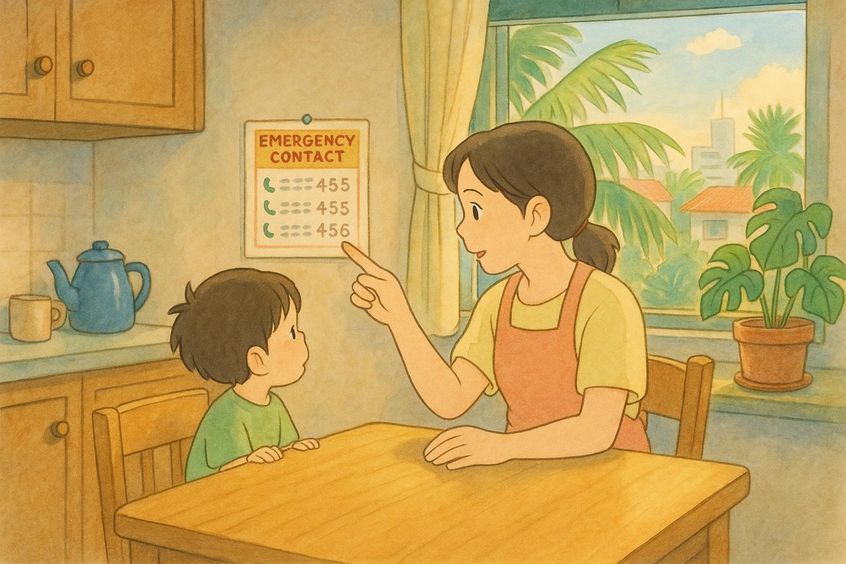
An emergency contact sheet sounds basic. But a nanny on the NannyEmployers subreddit made headlines simply for asking her employer to provide one - other parents called it "the biggest green flag." Your sheet should go beyond phone numbers. Write down your child's blood type, allergies, insurance policy number, the hospital you prefer, and - critically - a signed consent form authorizing your nanny to seek medical treatment on your behalf.

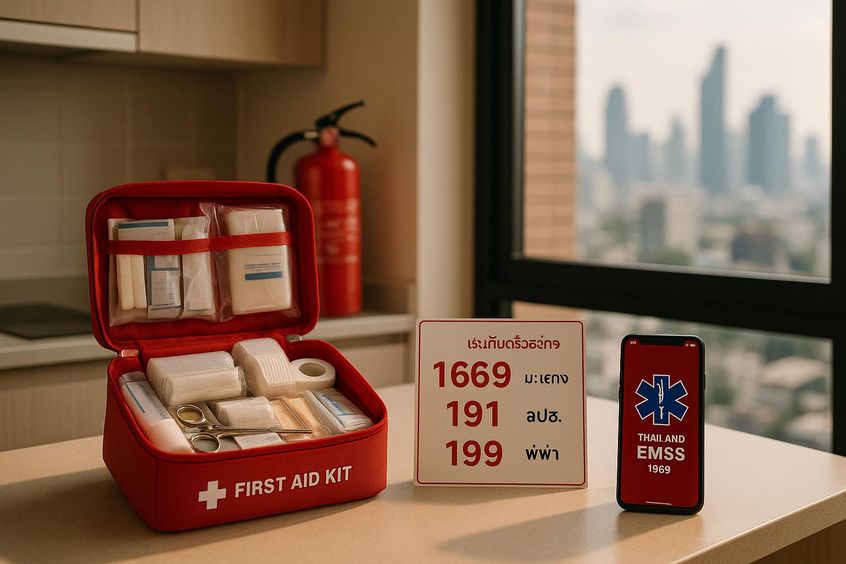
In Thailand, the key emergency number is 1669 for the National Institute for Emergency Medicine ambulance service. English support exists but is hit-or-miss, so if your nanny speaks primarily Thai, that's actually an advantage. For non-Thai-speaking caregivers - and Bangkok has a significant number of Myanmar-born nannies - consider saving the Tourist Police line (1155) as a backup. Their operators handle English, Chinese, and other languages around the clock. Fire emergencies go to 199, and police to 191.
When to call 1669 versus driving straight to a hospital? That's a judgment call worth hashing out in advance. Many experienced Bangkok parents recommend driving to the nearest private hospital for anything that isn't a spinal injury or major trauma, because Bangkok traffic delays ambulances just as much as private cars. Hospitals like Bumrungrad International (call 02-011-5222 for their 24-hour ER), Samitivej Sukhumvit (02-712-7007), and Bangkok Hospital (1719) all have dedicated pediatric emergency departments.
Insurance paperwork matters more than most parents realize until the bill shows up. Reddit threads are full of expats blindsided by private hospital ER bills reaching 60,000 to 100,000 THB for what seemed routine. Make sure your nanny knows where the insurance card is kept and understands she should present it at registration - not after treatment.
Fire Safety and Evacuation Plans for Caregivers
Bangkok's condo living means fire safety looks nothing like a suburban house. After a fire in a 38-storey Sukhumvit building in late 2025 left multiple residents trapped, many families took a hard look at their evacuation plans. Your nanny should know the location of every fire exit - not just the elevator, which shuts down during fires. Walk the route together at least once.
Pick a meeting point outside the building. For a nanny caring for multiple children, this matters a lot - she needs one clear destination, not a vague instruction to "get outside." Living above the tenth floor? Discuss what to do if stairwells fill with smoke: stay in the unit with wet towels under the door and call 199.
Teaching children basic fire drill behavior - stop, drop, and roll, plus "never hide from firefighters" - is something your nanny can reinforce through calm, simple practice. It doesn't need to be scary. Frame it as a game for younger kids.
Flood Preparedness - A Bangkok-Specific Concern
Bangkok's rainy season runs from May through October. Flash floods can turn streets into canals within an hour. For a nanny home alone with children, flooding creates a chain of problems: power outages, contaminated water, blocked roads making hospital access difficult, and the physical danger of rising water itself.
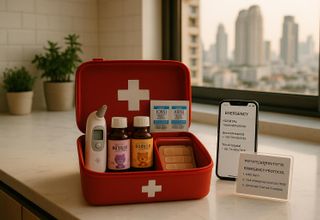
A practical flood kit doesn't need to be fancy. Keep a bag near the front door with bottled water, dry snacks, a flashlight, a portable phone charger, basic first aid supplies, and copies of important documents in a waterproof pouch. Your nanny should know where it is and what it's for.
During a flood, the priority is staying put unless water enters the living space. Moving through floodwater with children is dangerous - the water hides open drains, downed electrical wires, and debris. Ground-floor home? Discuss in advance where she should go: a neighbor's upper-floor unit, a nearby shopping mall, or another pre-arranged safe location.
FamBear recommends that families revisit their emergency plans at the start of each rainy season. Fifteen minutes of planning can prevent hours of confusion when the water starts rising.
Creating an Emergency Action Plan for Your Nanny
The best emergency plan fits on a single laminated page stuck to the refrigerator. It should answer six questions without requiring your nanny to think, search, or call you first: Who do I call? Where do I go? What is the child allergic to? Where is the insurance card? Where is the first aid kit? What is the building's evacuation route?
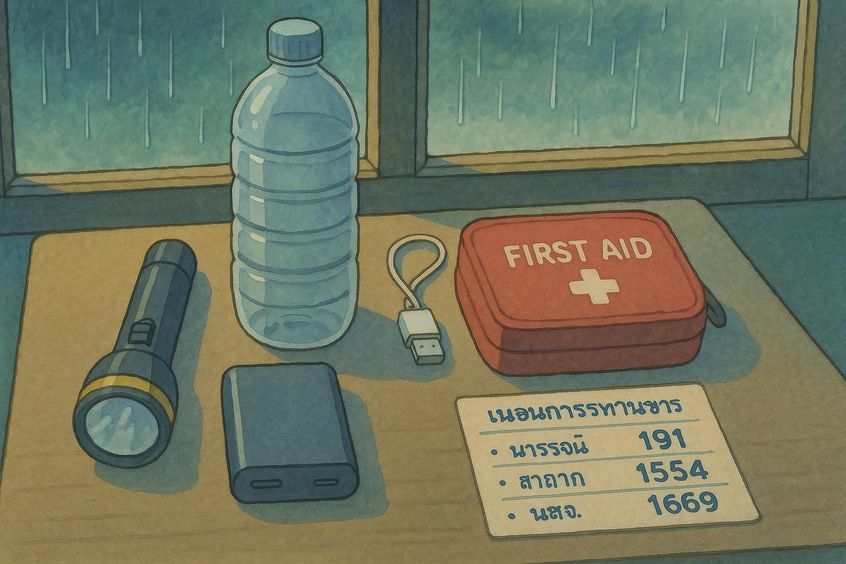
Beyond the sheet, regular conversations matter. Ask your nanny once a month: "If [child's name] started choking right now, what would you do?" Not as a test. As a refresher. Emergency knowledge fades fast without reinforcement, and a nanny who last thought about CPR six months ago isn't as ready as one who reviewed the steps last week.
FamBear families have access to onboarding resources that include emergency preparedness guidelines tailored to Bangkok. When you find a babysitter or book a professional nurse through the platform, emergency readiness is part of the conversation from the start - not an afterthought.
Where to Get Nanny First Aid and CPR Training in Bangkok
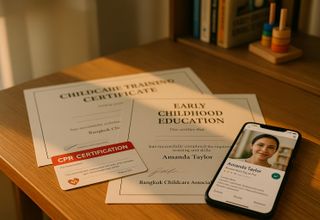
Several solid providers offer pediatric first aid and CPR courses in Bangkok, and the investment is modest compared to the peace of mind.
Bangkok First Aid (bangkokfirstaid.com) is affiliated with the American Heart Association and runs a dedicated Pediatric First Aid CPR AED course that takes one day. Classes come in both English and Thai. This is the same provider that partnered with the nanny platform Kiidu back in 2019 to certify their entire caregiver roster in an eight-hour AHA program covering CPR, choking response, burns, poisoning, and allergic reactions.
The Thai Red Cross (training.redcross.or.th) offers a six-hour Basic First Aid course year-round, primarily in Thai, at an affordable price point. For nannies more comfortable in Thai, this is often the easiest way in.
On a tighter budget? Safety in Thai provides CPR training with certification for around 1,000 THB as of April 2026. First Aid Training Bangkok (firstaidtrainingbangkok.com) offers comprehensive CPR and AED certification in both English and Thai.
Who pays? Best practice - and the approach FamBear encourages - is for the employer to cover training costs. A course running 1,000 to 5,000 THB is a fraction of what families spend monthly on childcare. Asking a nanny earning 22,000 to 30,000 THB per month to pay out of pocket creates an unnecessary barrier. Think of it like buying a car seat. It's just part of onboarding.
Thailand's 2024 Ministerial Regulation on domestic work (updated June 2025) established important protections for household employees - minimum wage of 372 THB per day in Bangkok, eight-hour workdays, paid leave - but it doesn't mandate first aid certification. The responsibility falls on families to make sure their caregivers are trained. That gap in the regulatory framework isn't going away soon, so proactive parents fill it themselves.
FAQ - Nanny Emergency Preparedness
Should a nanny be CPR certified?
Yes. CPR certification means your nanny has practiced the technique on a mannequin and can perform it under pressure. In Bangkok, where ambulance response averages ten to fifteen minutes, those first few minutes of CPR can be the difference between a good outcome and a tragic one.
What first aid training should a babysitter have?
At minimum, a babysitter should know infant and child CPR, choking response (back blows for infants, abdominal thrusts for older kids), basic wound care, and how to recognize an allergic reaction. A one-day pediatric first aid course covers all of this.
What should a nanny do if a child has an allergic reaction?
Administer epinephrine immediately if prescribed, call 1669, and keep the child calm and upright. In Bangkok, most allergists prescribe prefilled syringes rather than EpiPens, so your nanny needs hands-on training with the specific device your child uses.
How do you prepare a babysitter for an emergency?
Create a laminated emergency contact sheet with phone numbers, hospital details, allergies, insurance info, and the building's evacuation route. Walk through the plan together, and revisit it every few months to keep the information fresh.
What emergency information should you leave for a caregiver?
Your child's full name, blood type, allergies, current medications, insurance policy number, preferred hospital, your phone number and a backup contact, plus the Thai emergency numbers: 1669 (medical), 199 (fire), 191 (police), and 1155 (Tourist Police for English speakers).
What is the emergency number in Bangkok?
The main medical emergency number is 1669 (National Institute for Emergency Medicine). For fire, call 199. For police, call 191. The Tourist Police at 1155 offer multilingual support around the clock.
Where can nannies get first aid training in Bangkok?
Bangkok First Aid (AHA-affiliated), Thai Red Cross, Safety in Thai, and First Aid Training Bangkok all offer pediatric first aid and CPR courses. Prices range from 1,000 to 5,000 THB, and most courses take one day.
What should a nanny do during a flood in Bangkok?
Stay indoors unless water enters the living space. Avoid walking through floodwater - it hides open drains and downed wires. Use the pre-packed flood kit, move to an upper floor if needed, and contact the parents for further instructions.
Pulling It All Together
Emergency preparedness isn't about imagining worst-case scenarios all day. It's about making sure the person you trust with your child has the knowledge, the tools, and the confidence to act when seconds count. In Bangkok, that means understanding local risks - monsoon floods, dengue, the realities of navigating Thai emergency services - and building a plan around them.
Start this week. Print an emergency contact sheet. Book a first aid course. Walk your nanny through the fire escape route. Talk about what to do if your child has an allergic reaction. Small steps, enormous payoff: the knowledge that your child is in capable hands, even when yours aren't there.
For more guidance on choosing the right caregiver, explore FamBear's full range of services or read our related articles on keeping your child safe with a caregiver and what to do when your child gets sick with a nanny.