
If this is your first rainy season in Bangkok with kids, the hardest part is usually not the rain itself - it is the unpredictability around school pickups, commute delays, and sudden plan changes. A clear childcare system helps your family stay calm when weather conditions change fast.
Why rainy season affects childcare more than families expect
From roughly May to October, many Bangkok families face heavier afternoon showers, occasional street flooding in specific areas, and slower travel times. Even on days with short rain bursts, door-to-door timing can change a lot.
For parents, that usually creates three pressure points:
- Pickup and drop-off timing are unreliable.
- Caregiver commute can become slower and more expensive.
- Children spend more time indoors, which changes routines and energy levels.
A good rainy-season plan does not try to control the weather. It creates clear rules for what to do when delays happen.
Build a simple rain protocol with your caregiver
Before peak rainy weeks, agree on one shared protocol in writing. Keep it short enough that everyone can follow it without confusion.
Your protocol should include:
- Commute cutoff time: the latest safe departure time for school pickup.
- Fallback transport rule: when to switch from BTS/MRT to taxi.
- Cost policy: who covers weather-related transport surcharges.
- Update cadence: how often to send location updates when delayed.
- Emergency handover contact: one backup adult if parents are unreachable.
Use one main chat thread for all pickup updates. When messages are split across multiple chats, important details get missed.
If you are still comparing long-term care options, start with the profiles and filters on the nanny services page, then define your rainy-season protocol during interviews.
Commute planning that actually works in Bangkok rain
Many families plan only for normal traffic conditions. In rainy months, build your plan around delay ranges instead.
A practical structure:
- Normal day buffer: add 20-30 minutes.
- Heavy rain buffer: add 45-60 minutes.
- Critical pickup days (exams, early dismissals, medical appointments): pre-book fallback transport.
For younger children, late pickups can quickly change into stress. Agree on a "no-surprise" rule: if ETA shifts by more than 15 minutes, caregiver should sends a short update immediately.
Example message format:
- "Left school 16:10, heavy rain near Asok, ETA condo 17:05 by taxi."
Short, factual updates reduce parent anxiety better than long explanations.
Home setup for long indoor afternoons
Rainy season means more indoor time. Families who plan indoor structure in advance usually report fewer evening meltdowns.
Create three ready-to-use activity blocks:
- High-energy indoor play (15-20 min)
- Quiet focus activity (20-30 min)
- Wind-down routine (10-15 min)
Keep one small "rain box" ready with art supplies, sticker books, simple puzzles, and rotation toys. Rotating items weekly helps children stay interested without buying new materials every week.
For backup or short-notice care days, maintain a second plan with a babysitter service so your household does not depend on one commute path.

Health and sick-day readiness during wet months
Rain does not directly cause illness, but rainy-season routines can increase exposure risk through crowded transport, damp clothing, and indoor group contact.
Build a light sick-day playbook in advance:
- Pediatric clinic contacts near home and school
- Preferred hospital and route options
- Child medicine log template
- Consent note for caregiver decisions if parents are in meetings
Also align on non-negotiables:
- Change wet clothes immediately after arrival
- Hand wash on entry
- Dry shoes and bags before next day
- Report first symptoms early, even if mild
If your family schedule changes often, compare options on all childcare services and keep at least one backup profile pre-vetted.
Budget planning for rainy-season childcare logistics
Most direct childcare pricing remains in THB, but rainy months can increase operational costs:

- more taxi usage,
- occasional overtime,
- extra backup bookings.
For many families, adding a small monthly weather buffer avoids stressful last-minute decisions. A practical planning range is 1,500-4,000 THB/month (roughly $50-$120 as of April 2026) depending on distance, school schedule, and backup frequency.
Keep USD references minimal and use THB for daily decisions. Review the buffer monthly instead of reacting trip by trip.
Weekly rainy-season checklist for expat parents
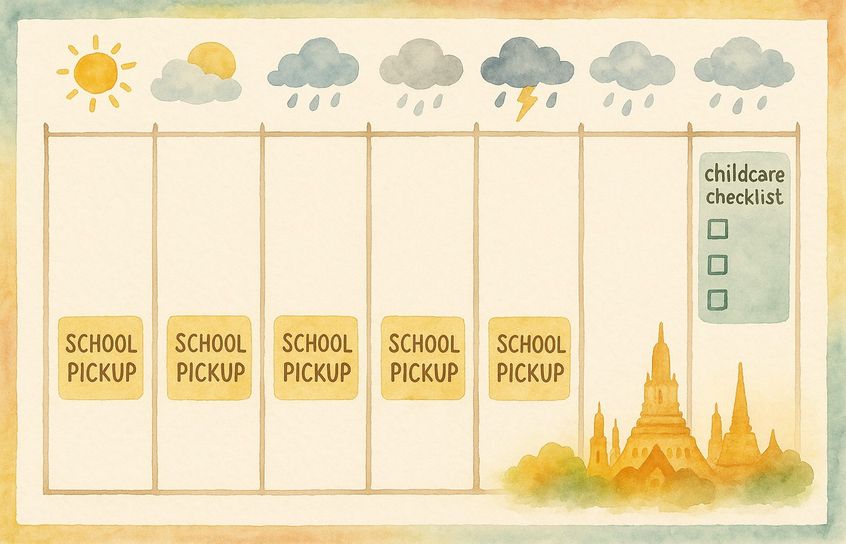
Use this 10-minute check every Sunday evening:
- Confirm school calendar changes for the week.
- Mark high-risk weather windows.
- Reconfirm caregiver pickup times.
- Check backup transport options.
- Restock indoor activity materials.
- Refill child health essentials.
- Verify emergency contacts are current.
Consistency matters more than complexity. A simple repeatable system is what keeps rainy weeks manageable.
For more childcare planning resources, browse the FamBear blog.
Frequently Asked Questions
When should we activate a rainy-day backup childcare plan in Bangkok?
Activate it when forecast and route conditions suggest likely pickup delays over 30 minutes, or when your primary caregiver confirms commute disruption before departure.
Should we switch to taxi for every rainy-day pickup?
Not always. Use a simple rule based on route risk and time sensitivity, and switch only when delay risk is high or school closing windows are strict.
How much extra budget should expat families keep for rainy-season childcare logistics?
Many families set aside 1,500-4,000 THB per month for transport surcharges, occasional overtime, and short-notice backup bookings.
What is the most important communication habit with a caregiver during heavy rain?
Use one chat thread and require immediate ETA updates when arrival shifts by more than 15 minutes. Short factual messages prevent confusion.
What should be in a child-focused rainy-season emergency sheet?
Include school contacts, caregiver contacts, hospital preference, pediatric clinic details, allergy notes, and transport fallback instructions in one page.