
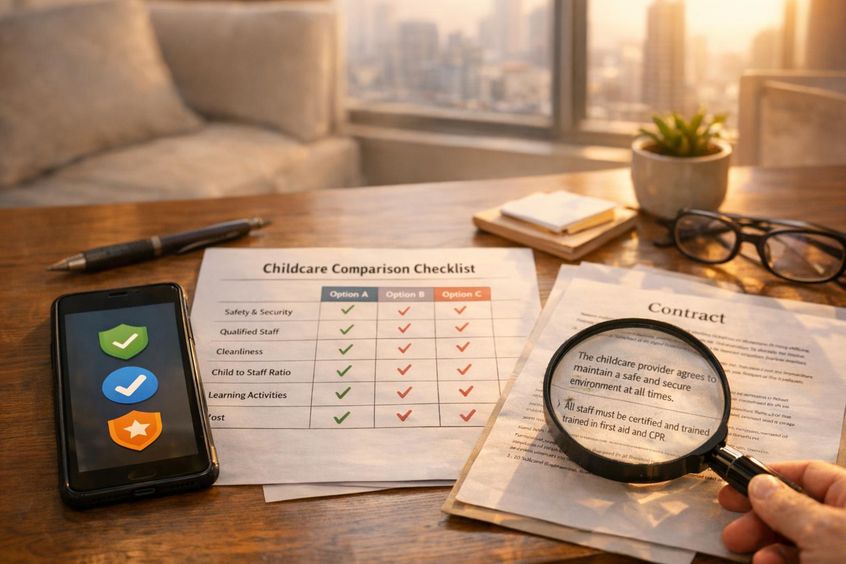
Choosing between a nanny and a daycare center in Thailand is rarely just about schedule or price. For most expat families, the real stress is safety: who is responsible, how incidents are handled, and what proof you can actually verify before trusting someone with your child.
This guide gives you a practical framework you can use in Bangkok and other cities. Instead of generic pros and cons, we focus on safety checks, contract points, and red flags.
Start with one reality: risk is structured differently
With a nanny, care is one-to-one and flexible. Your biggest safety should be individual caregiver and your own process. With daycare, care is team-based and process-driven. Your biggest safety should be center quality, ratio management, and clarity.
That means your checklist should be different:
- Nanny route: identity, references, behavior in trial shifts, emergency judgment.
- Daycare route: staff ratios, incident logs, pickup controls, illness policy.
If you are still deciding, compare both tracks in parallel for one week before committing.
Nanny safety checks that matter in Thailand
Start with identity and reference proof before discussing long-term schedules.
Use this minimum verification stack:
- Government ID copy and a live match check during interview.
- Two recent family references with direct calls, not text only.
- A paid trial shift with at least one parent observing transitions.
- Clear phone-use expectations while supervising children.
- Emergency scenario questions: fever, fall, choking, delayed parent pickup.
During the trial, watch for process, not charm. Strong candidates narrate what they are doing, ask clarifying questions, and follow household safety rules without reminders.
Red flags during nanny hiring:
- Refuses reference calls or gives only unverifiable contacts.
- Avoids paid trial days or asks for immediate full commitment.
- Contradictory stories about previous families.
- Heavy distraction by personal phone around children.
- Defensive response when asked about emergency steps.
If you want a structured hiring funnel, you can also compare verified profiles on FamBear nanny services and keep your own interview scorecard.
Daycare safety checks that parents often skip
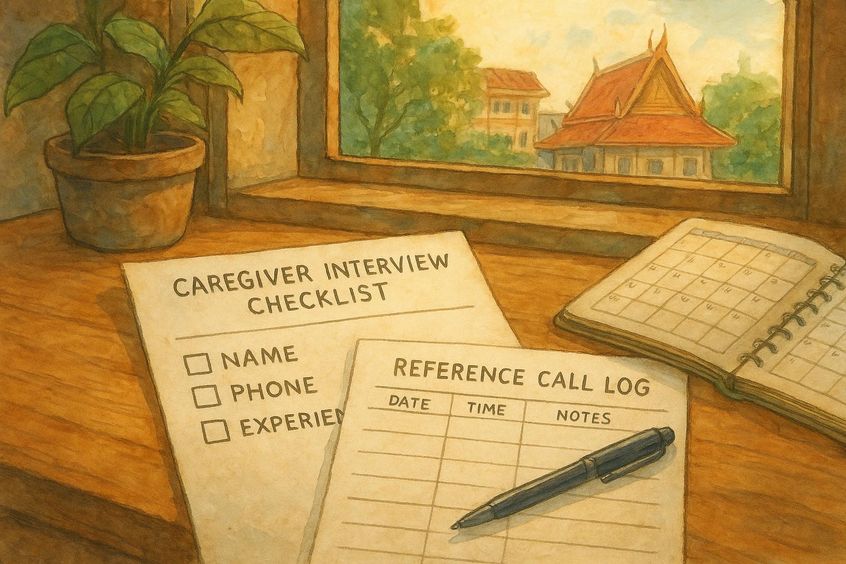
Many parents assume "licensed" means consistently safe operations. In fact, center quality varies by management discipline.
On your visit, request evidence of operation quality:
- Child-to-staff ratio by age group at your target drop-off time.
- Controlled pickup policy and ID checks for authorized adults.
- Illness exclusion and return-to-class rules.
- Incident reporting process and escalation timeline.
- Staff turnover in the last 6-12 months.
Ask for walk through bathroom, nap, and transition periods, not only the classroom tour. Risk often appears in handoff moments when supervision gets thin.
Daycare red flags:
- Ratios are vague or change heavily during your needed hours.
- No written incident process.
- Pickup rules depend on verbal familiarity only.
- Frequent understaffing explained as "temporary" every week.
- You are discouraged from follow-up observation visits.
If you need other options, shortlist centers and then compare against your family rhythm with a backup caregiver via childcare services in Thailand.
Contracts: where most preventable disputes start
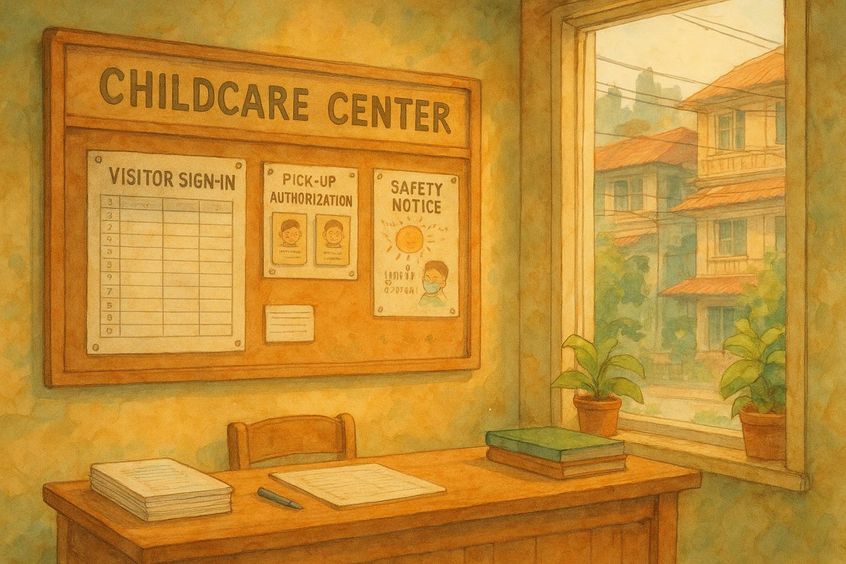
Whether you hire a nanny directly or enroll in daycare, a clear written agreement reduces risk.
For nanny agreements, include:
- Core duties and child-only vs household tasks.
- Work hours, overtime rules, rest days, and transport expectations.
- Paid trial terms and probation period.
- Illness protocol and medication consent boundaries.
- Termination notice and immediate termination triggers for safety breaches.
For daycare enrollment documents, confirm:
- Exact operating hours and late pickup penalties.
- Illness policy and temporary exclusion criteria.
- Photo/video policy and parent communication cadence.
- Emergency medical decision workflow.
- Refund or withdrawal terms.
If anything important is "we usually do this" but not written, treat it as unresolved risk.
Nanny vs daycare: quick safety decision matrix
| Situation | Often safer default | Why |
|---|---|---|
| Infant with irregular feeding/sleep | Nanny | One-to-one control and home routine consistency |
| Highly social toddler | Daycare (good ratio center) | Peer interaction plus routine structure |
| Parent travel-heavy schedule | Nanny + backup | Flexibility for variable hours |
| Child with frequent illness | Nanny | Lower exposure vs group setting |
| Parents need formal process audit trail | Daycare | Standardized logs and center procedures |
No option is completely safe. The safer choice is the one you can verify and monitor consistently.
72-hour shortlist checklist for expat families
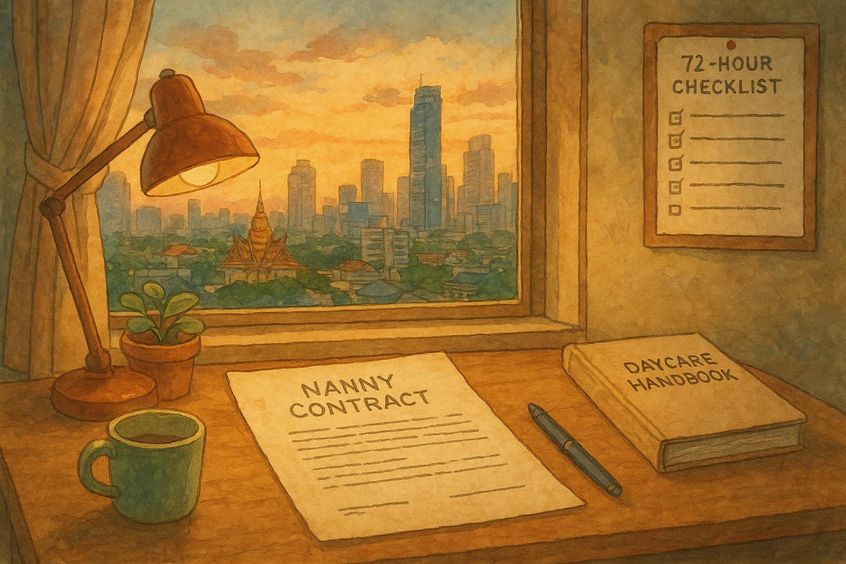
When you are close to decision fatigue, run this three-day workflow:
Day 1:
- Interview two nanny candidates and visit two daycare centers.
- Use one scoring sheet across all options.
Day 2:
- Call references and request one paid nanny trial.
- Ask centers follow-up questions on incidents and pickup controls.
Day 3:
- Compare written terms side by side.
- Reject any option with unresolved safety ambiguity.
- Keep one backup option active for the first month.
This process is slower than a quick decision, but it prevents the most expensive mistakes: unsafe supervision, emergency confusion, and abrupt caregiver turnover.
Final takeaway
In Thailand, nanny and daycare decisions are safest when treated as a verification project, not a vibe decision. Prioritize observable process, written commitments, and trial-based evidence.
If your family wants flexibility, start with nanny screening discipline. If your family wants routine and process visibility, choose a center that can show operational proof - not just a good tour.
Either way, your best protection is a documented checklist and a backup plan before the first full week of care.
Frequently Asked Questions
It depends on what you can verify. A well-vetted nanny with references and a paid trial can be safer for infants or irregular schedules, while a transparent daycare with stable ratios and incident protocols can be safer for families who want standardized oversight.
What is the biggest red flag when hiring a nanny?The biggest red flag is refusal of direct reference checks or pressure to skip a paid trial. If a candidate avoids verification steps, treat that as a hard stop and move on.
What should I ask a daycare center before enrolling?Ask for age-specific ratios during your real drop-off window, written illness and incident policies, and controlled pickup procedures. If answers are vague or unwritten, risk is higher than it appears.
Do I really need a written contract for childcare in Thailand?Yes. Written terms prevent misunderstandings about hours, duties, overtime, illness handling, and termination triggers. If a critical point is only verbal, it is difficult to enforce later.
How long should a nanny trial period be?For most families, 1-3 paid trial shifts are enough to evaluate child interaction, safety habits, and communication style. The goal is to observe behavior in real routines, not just interview performance.