
A great interview does not guarantee a great childcare match. The real test is when your routine starts.
That is exactly why a nanny trial day works. It lets you evaluate practical fit before you commit to a long-term arrangement. In Bangkok, this is even more important because traffic delays and weather shifts can quickly change how a day unfolds.
Why a trial day is better than interview-only hiring
Interviews evaluate answers. Trial days evaluate behavior.
Even strong candidates can struggle when there is a sudden toddler meltdown, a meal refusal, or a timing change. A structured trial helps you see how a caregiver performs when the day is not perfect.
A useful trial should answer five questions:
- Does your child settle with this caregiver?
- Can they follow instructions without repeated reminders?
- Do they stay calm when plans change?
- Is communication clear and respectful?
- Would you trust them on a busy weekday?
If you are still evaluating options, start with verified profiles on FamBear nanny services and compare shorter-session care through FamBear babysitter services.
24-hour pre-trial checklist
Before the trial, send one short written brief so expectations are clear.
Include:
- Trial duration (for example, 4 hours)
- Trial payment amount and payment method
- Child routine details (meals, naps, allergies, screen limits)
- House boundaries (photos, visitors, discipline approach)
- location (entry pass, parking, unit details)
- Emergency contacts and preferred hospital
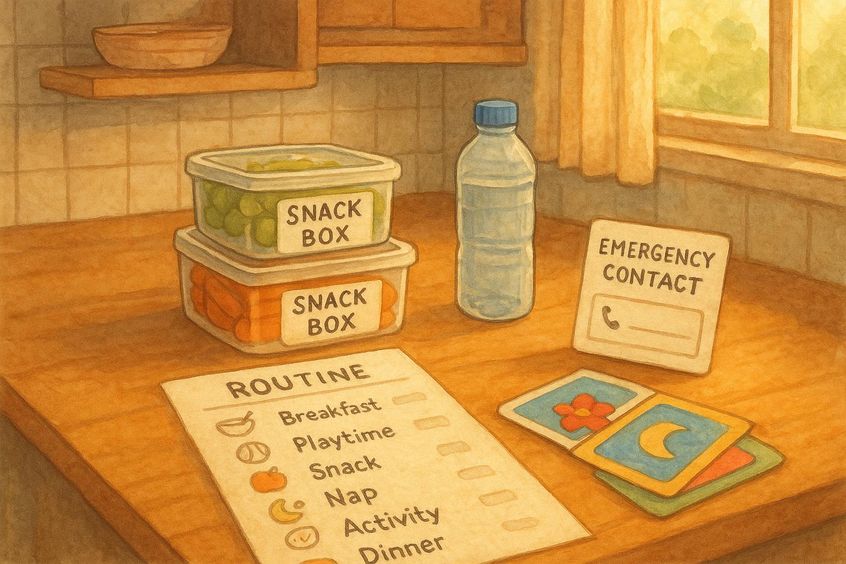
Then set up your home so the caregiver can succeed:
- Lay out activity options for both indoor and outdoor plans
- Label essentials (wipes, spare clothes, medicine if needed)
- Prepare one simple meal plan for the trial window
- Share a short note on known triggers and calming strategies
A practical 4-hour nanny trial schedule
Use a structure that includes calm and pressure moments.
- 00:00-00:20 - handoff and child settling
- 00:20-01:20 - structured play and engagement check
- 01:20-02:00 - snack or meal routine
- 02:00-03:00 - outing or active indoor block
- 03:00-03:40 - transition to quiet activity
- 03:40-04:00 - parent debrief
The goal is not a perfect shift. The goal is to observe judgment, communication, and consistency during real childcare moments.
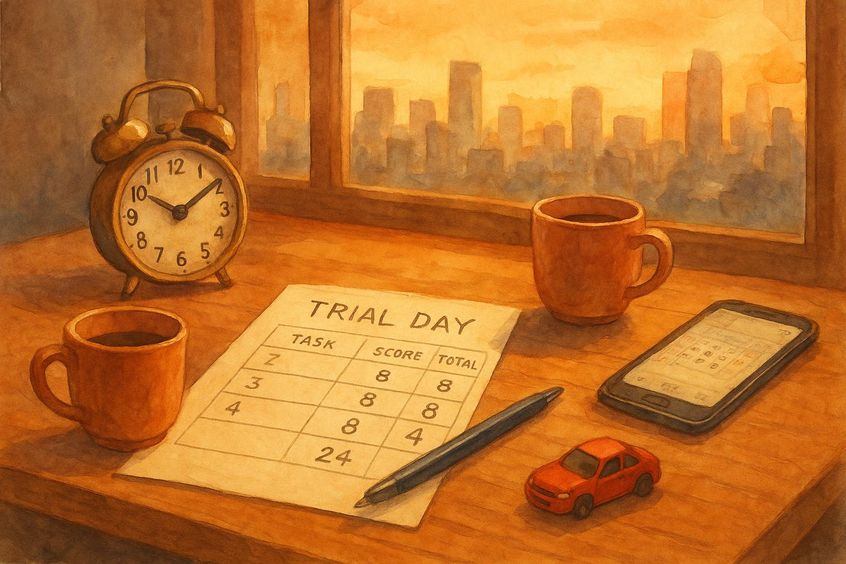
Trial day scorecard (objective, quick, reusable)
| Area | What to observe | Score (1-5) |
|---|---|---|
| Child connection | Warmth, patience, responsiveness | |
| Safety habits | Supervision, hygiene, hazard awareness | |
| Communication | Updates clearly, asks useful questions | |
| Routine execution | Handles meals, naps, transitions well | |
| Initiative | Solves small issues without panic | |
| Professionalism | Punctual, respectful, clear boundaries |
Decision guide:
- 24-30: strong fit, move to offer stage
- 18-23: possible fit, run a second trial with clear focus points
- Below 18: do not proceed
Red flags and yellow flags
Red flags (usually no-hire)
- Child left unsupervised
- Allergy or safety instructions ignored
- Harsh discipline language or behavior
- Mistakes hidden instead of reported
Yellow flags (often coachable)
- Slight lateness with clear communication
- Needs one reminder on house preferences
- Learns your child rhythm a little slowly
Make a decision within 24 hours
Fast decisions are usually better because observations are still clear.
Send a concise post-trial message:

- Thank the caregiver for their time
- Highlight what worked well
- Share your decision directly
- If hiring, confirm next steps and start date
If you are comparing multiple candidates, keep your method identical each time: same trial structure, same scorecard, same decision threshold.
For more family hiring guidance, see the FamBear blog and browse all childcare options on FamBear services.
Frequently Asked Questions
Should a nanny trial day in Bangkok be paid?
Yes. A paid trial sets professional expectations and attracts stronger candidates. It also creates a fair foundation for feedback and future negotiations.
How long should a nanny trial day be?
A 3-4 hour trial is usually enough to test handoff, play, meal, and transition skills. If you are still unsure, run a second focused trial rather than one very long shift.
Can I leave home during the trial day?
You can step out for part of the trial, but keep it planned and short for first-time evaluation. Start with a visible handoff period, then test independent care in a controlled window.
What is the biggest hiring mistake during trial days?
The biggest mistake is evaluating only personality and skipping structured scoring. Use a simple scorecard so your decision is based on consistent criteria, not mood.
What should I do if my child cries during the trial?
Mild crying is normal in new-caregiver transitions. Focus on how the caregiver responds: calm tone, age-appropriate comfort, and clear communication with you.